 Skip to content
CONDITIONS AND SYMPTOMS
Peripheral Nerves
Numbness, tingling, burning, electric-shock pain or muscle weakness may result from peripheral nerve irritation or compression. Similar symptoms can also originate from the spine, a nerve plexus or other causes. This section links to the main resources on common neuropathies and nerve problems without duplicating the same conditions in different anatomical sections.
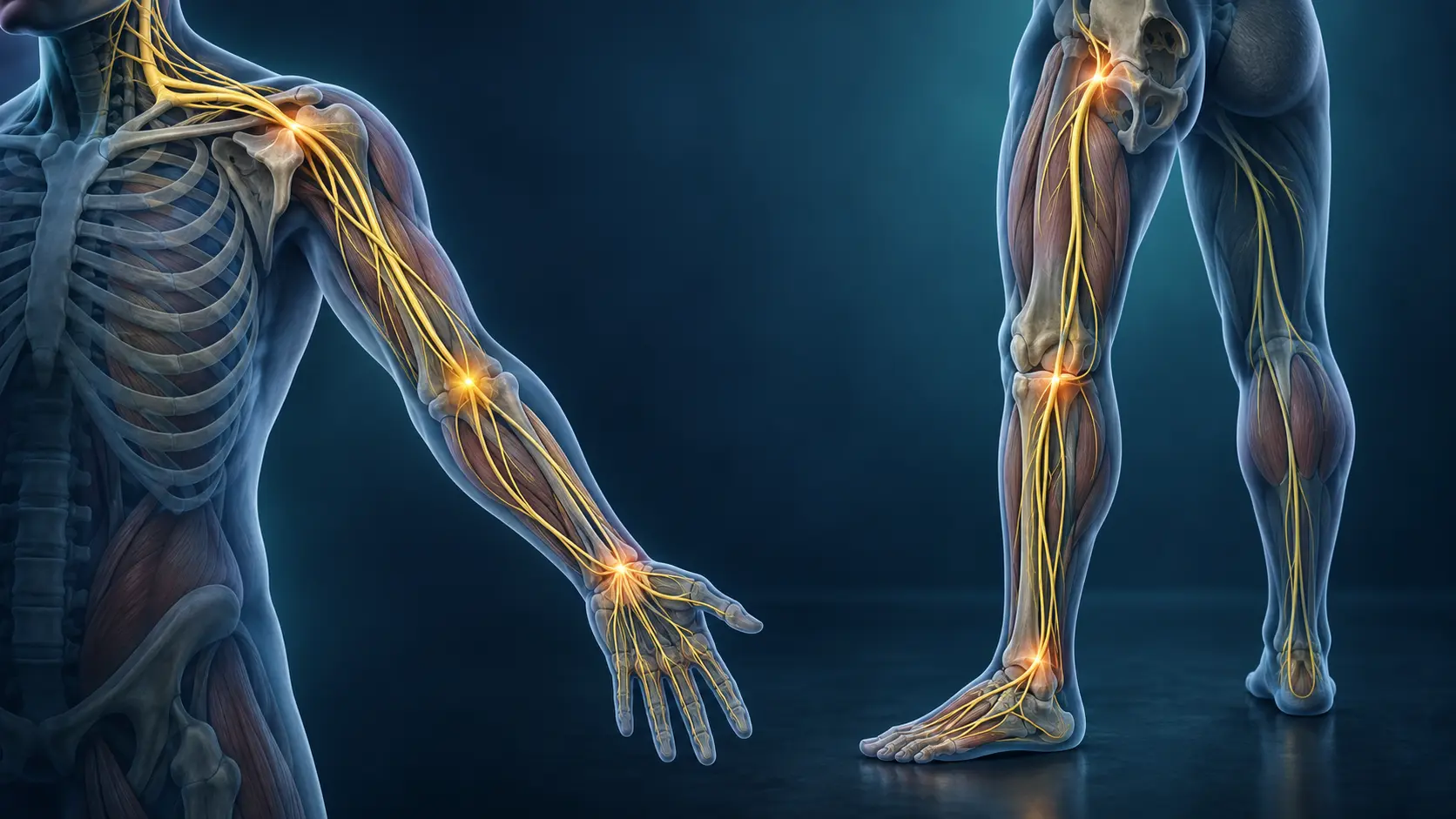
Common peripheral nerve problems
- Carpal tunnel syndrome (in Polish) — median nerve compression, often causing night-time numbness of the thumb, index and middle fingers.
- Ulnar neuropathy (in Polish) — a common cause of numbness in the little finger and ulnar half of the ring finger; compression often occurs around the elbow.
- Radial tunnel syndrome (in Polish) — may cause deep pain on the lateral side of the elbow and forearm, usually without typical finger numbness.
- Tarsal tunnel syndrome (in Polish) — one cause of burning, tingling and numbness of the sole.
- Meralgia paraesthetica (in Polish) — irritation of the lateral femoral cutaneous nerve, causing altered sensation over the anterolateral thigh without typical muscle weakness.
- Foot drop and the common peroneal nerve (in Polish) — new difficulty lifting the foot requires assessment to determine whether the cause lies in a peripheral nerve, the spine or another part of the nervous system.
- Painful scar and neuroma (in Polish) — focal burning or electric pain after surgery or injury may arise from an injured nerve or one trapped in scar tissue.
How does an orthopaedic surgeon identify the affected nerve?
The distribution of altered sensation, individual muscle strength, reflexes, symptom onset and examination of potential compression sites are central. “Hand numbness” or “foot numbness” alone does not identify a diagnosis. Symptoms must also be assessed for a spinal or more proximal nerve source.
Ultrasound, EMG or MRI?
These tests answer different questions. Ultrasound shows nerve structure and surrounding tissues and allows dynamic assessment. Nerve conduction studies and EMG provide information on nerve and muscle function and may help locate a lesion. MRI is selected for the clinical situation, such as assessment of a deep lesion, plexus or spine. Not every typical compression neuropathy requires all these tests routinely.
When is quicker assessment needed?
New or progressive muscle weakness, foot or wrist drop, rapidly increasing sensory loss, symptoms after significant trauma or impaired limb circulation requires prompt assessment. Sudden neurological symptoms involving much of a limb or accompanied by speech, balance, bladder or bowel disturbance requires urgent medical assessment.
Different routes lead to the same resources
Ulnar neuropathy is also accessible from the elbow section, tarsal tunnel syndrome from the foot section and carpal tunnel syndrome from the hand and wrist section. These are alternative routes to one main clinical resource, not separate versions of the same condition.
Night-time hand numbness: a practical carpal tunnel guide
Carpal tunnel syndrome involves pressure on the median nerve at the wrist. Symptoms commonly affect the thumb, index and middle fingers and part of the ring finger. Numbness mainly in the little finger, symptoms extending from the neck or a different pattern may point to another or an additional problem.
What to record before your appointment
Draw the affected fingers on a simple outline of your hand. Note how often symptoms wake you, whether shaking the hand helps, whether numbness persists during the day and whether you drop objects or struggle with buttons. Bring previous tests and a medication list. Mention diabetes, thyroid disease, pregnancy and any previous wrist injury or surgery.
Which tests are useful?
The clinician combines the symptom history and examination. The AAOS guideline supports using the CTS-6 clinical assessment instead of routinely requesting ultrasound or nerve-conduction testing in every patient. Additional tests can be useful when the diagnosis is uncertain or there is a specific question about nerve structure, function or severity. MRI is not a routine diagnostic test for carpal tunnel syndrome.
What can treatment involve?
A night splint that keeps the wrist in a neutral position and modification of provoking activities may help early symptoms. A corticosteroid injection may provide temporary relief, but does not offer reliable long-term improvement. Persistent symptoms, constant sensory loss or weakness may lead to a discussion about surgical release. The choice depends on assessment, not on a social-media checklist.
Questions to ask about an operation
- What supports the diagnosis, and is there evidence of nerve damage?
- What improvement is realistic for my sensation, strength and sleep?
- Which procedure is proposed and why?
- How will wound care, work, driving and hand use be managed?
- When should I contact the team sooner than the planned review?
Increasing weakness or constant numbness deserves prompt assessment. Severe longstanding nerve damage may limit recovery even after pressure is relieved, so do not rely indefinitely on shaking the hand or repeating injections.
References: AAOS patient guide; AAOS 2024 guideline overview.
Medical author
Tomasz Poboży - orthopaedic surgeon, MD, PhD — specialist in orthopaedics and musculoskeletal traumatology.
This educational material does not replace an individual consultation or medical examination. Last updated: 22 October 2026.