 Skip to content
SPORTS MEDICINE AND RECONSTRUCTIVE SURGERY
Shoulder
The shoulder in sports medicine and reconstructive surgery: instability, rotator cuff injury, treatment decisions and a safe return to activity.
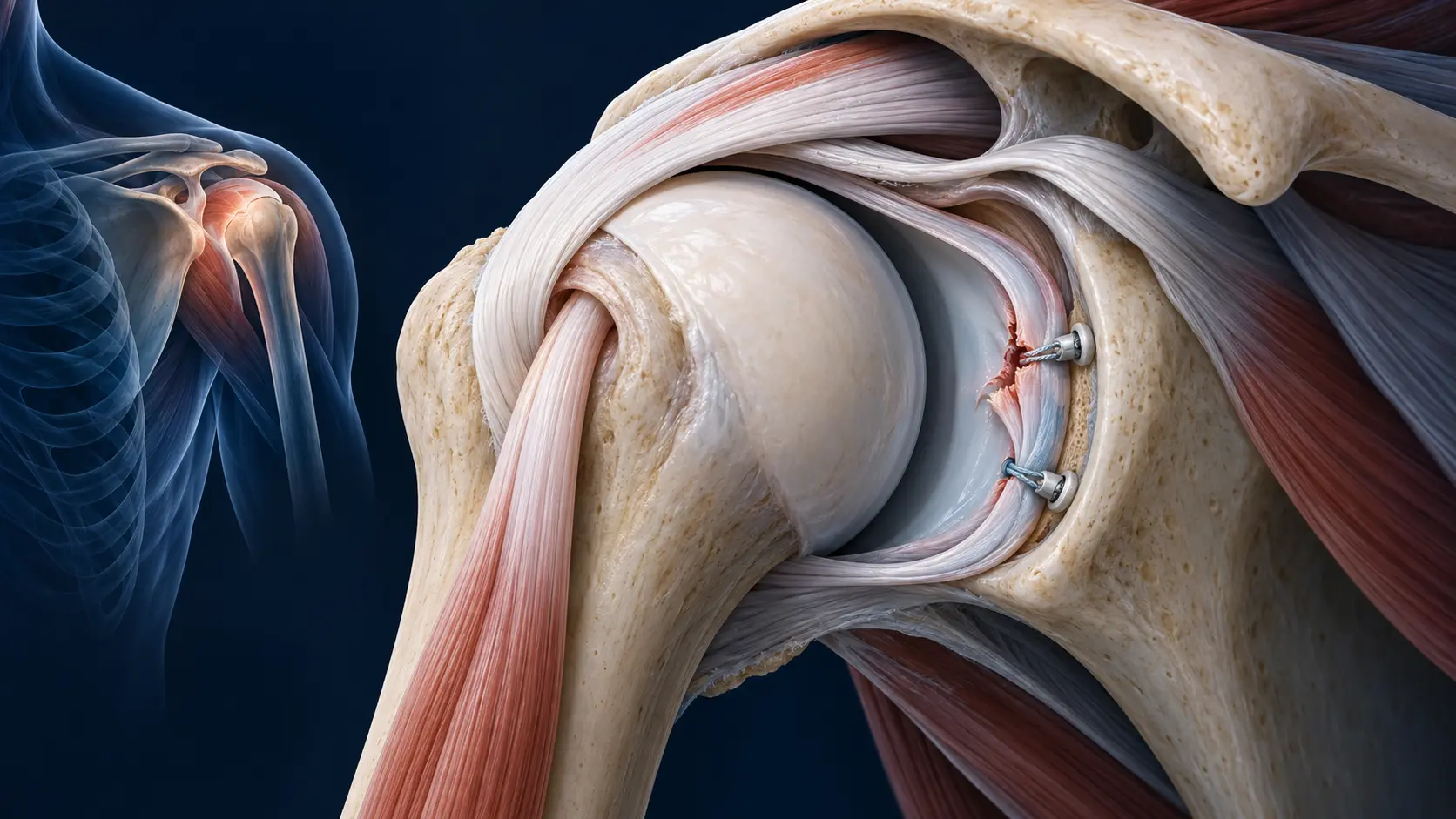
Recurrent shoulder instability
Repeated dislocations or a feeling that the shoulder is slipping out requires assessment of instability direction, labral and bone injuries, and expectations for sport and work. Detailed guide: My Shoulder Keeps Slipping Out — Recurrent Shoulder Instability (in Polish).
Rotator cuff injury
Not every rotator cuff tear requires surgery. Time since injury, tear size and pattern, strength, tissue quality, symptoms and expected activity matter. Details are available in Rotator Cuff Tear — When Is Surgery Needed? (in Polish).
What does an orthopaedic surgeon aim to achieve with reconstruction?
Arthroscopy, cuff repair, shoulder stabilisation and other reconstruction techniques are selected for a specific problem. The procedure’s name should not replace a diagnosis. This section covers sports activity, instability and reconstruction, with links to more detailed resources.
Return to sport
Return after a shoulder injury or operation should not depend on time alone. Pain, motion, strength, scapular control, stability and the ability to perform sport-specific movements are assessed. The protocol must reflect the injury and operation.
Chronic shoulder conditions, such as frozen shoulder or calcific tendinopathy, are discussed in Shoulder Conditions. This page focuses on sports problems, instability and reconstruction.
Medical author
Tomasz Poboży - orthopaedic surgeon, MD, PhD — specialist in orthopaedics and musculoskeletal traumatology.
This educational material does not replace an individual consultation or medical examination. Last updated: 11 September 2026.