 Skip to content
FOR PATIENTS · REHABILITATION
Shoulder and upper arm rehabilitation without injury
A guide to shoulder and upper arm problems without a single injury. Find the topic that matches the established diagnosis before choosing a detailed exercise programme.
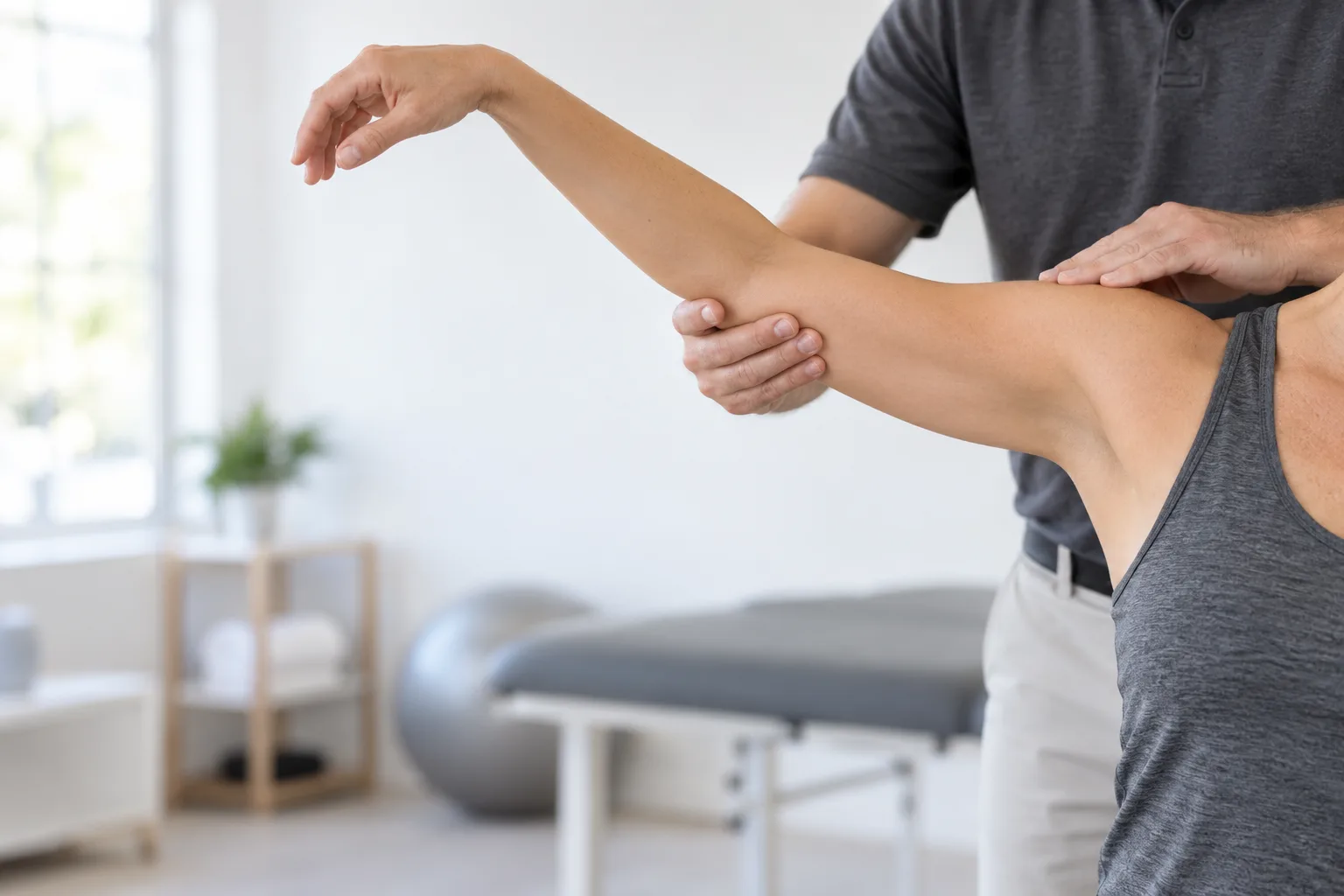
Problems an orthopaedic surgeon assesses in this area
The topics below provide an overview. Detailed exercise protocols are being developed as separate pages; these summaries are not complete exercise programmes.
Subacromial pain and rotator cuff tendinopathy
Problems involving loading of the rotator cuff tendons and subacromial region. This topic concerns activity selection and movement tolerance, rather than rehabilitation following tendon repair.
Frozen shoulder
A separate pathway for painful restriction of shoulder movement. Pain and stiffness are important when planning rehabilitation; different shoulder conditions should not be treated as the same problem.
Calcific tendinopathy
Symptoms associated with calcium deposits in the shoulder tendons. Management depends on the clinical presentation; an imaging report describing a deposit is not an exercise programme.
Glenohumeral osteoarthritis
Movement, strength and daily activities in diagnosed glenohumeral osteoarthritis. This is separate from rehabilitation after shoulder replacement.
Atraumatic shoulder instability
Shoulder control and stability problems that did not begin with an acute dislocation. The diagnosis and pattern of instability matter when selecting an appropriate programme.
What to prepare before planning rehabilitation
Note which activities are difficult: reaching a shelf, dressing, washing your hair or working with an elevated arm. The direction of limited movement helps you discuss rehabilitation goals with your physiotherapist.
An appropriate programme is selected for the diagnosis and current ability, rather than symptom similarity alone. If the cause is unclear, discuss it with a doctor or physiotherapist first.
Author: Tomasz Poboży - orthopaedic surgeon, MD, PhD. Educational information; it does not replace individual assessment and advice.