 Skip to content
FOR PATIENTS · REHABILITATION
Hand and wrist rehabilitation without injury
A guide to hand and wrist problems without a single injury. Find the topic that matches the established diagnosis before choosing a detailed exercise programme.
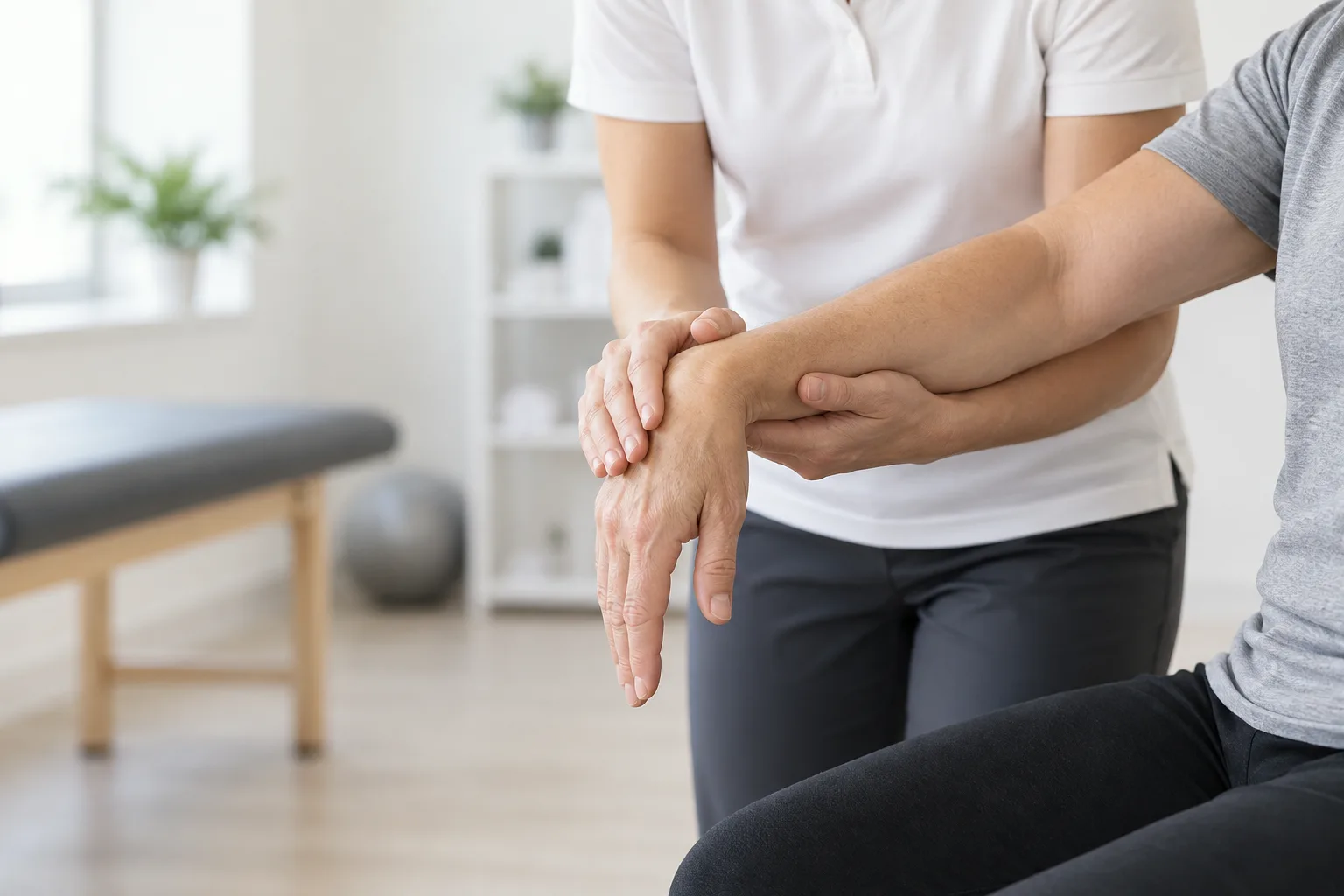
Problems an orthopaedic surgeon assesses in this area
The topics below provide an overview. Detailed exercise protocols are being developed as separate pages; these summaries are not complete exercise programmes.
Thumb base osteoarthritis
Gripping, pinching and thumb-loading difficulties associated with diagnosed thumb base osteoarthritis. This topic focuses on hand function in everyday tasks.
Finger osteoarthritis
Finger stiffness, pain and functional limitations related to osteoarthritis. Management should consider the particular joints and activities causing difficulty.
De Quervain’s tenosynovitis
Symptoms on the thumb side of the wrist. This is separate from thumb base osteoarthritis; the resources do not assume that home exercises replace other indicated treatment.
Wrist tendon overuse problems
Symptoms involving the wrist flexor or extensor tendons. The starting point is identifying the tissues and loads relevant to the functional difficulty.
Chronic hand and wrist stiffness
Restricted movement without a recent injury. The cause of stiffness needs to be established before choosing a programme; a symptom is not the same as a specific diagnosis.
What to prepare before planning rehabilitation
Identify whether the main difficulty is wrist movement, bending the fingers, precision grip or thumb use. Hand rehabilitation considers how symptoms relate to specific everyday tasks.
An appropriate programme is selected for the diagnosis and current ability, rather than symptom similarity alone. If the cause is unclear, discuss it with a doctor or physiotherapist first.
Author: Tomasz Poboży - orthopaedic surgeon, MD, PhD. Educational information; it does not replace individual assessment and advice.