 Skip to content
FOR PATIENTS · REHABILITATION
Hip and pelvis rehabilitation without injury
A guide to hip and pelvis problems without a single injury. Find the topic that matches the established diagnosis before choosing a detailed exercise programme.
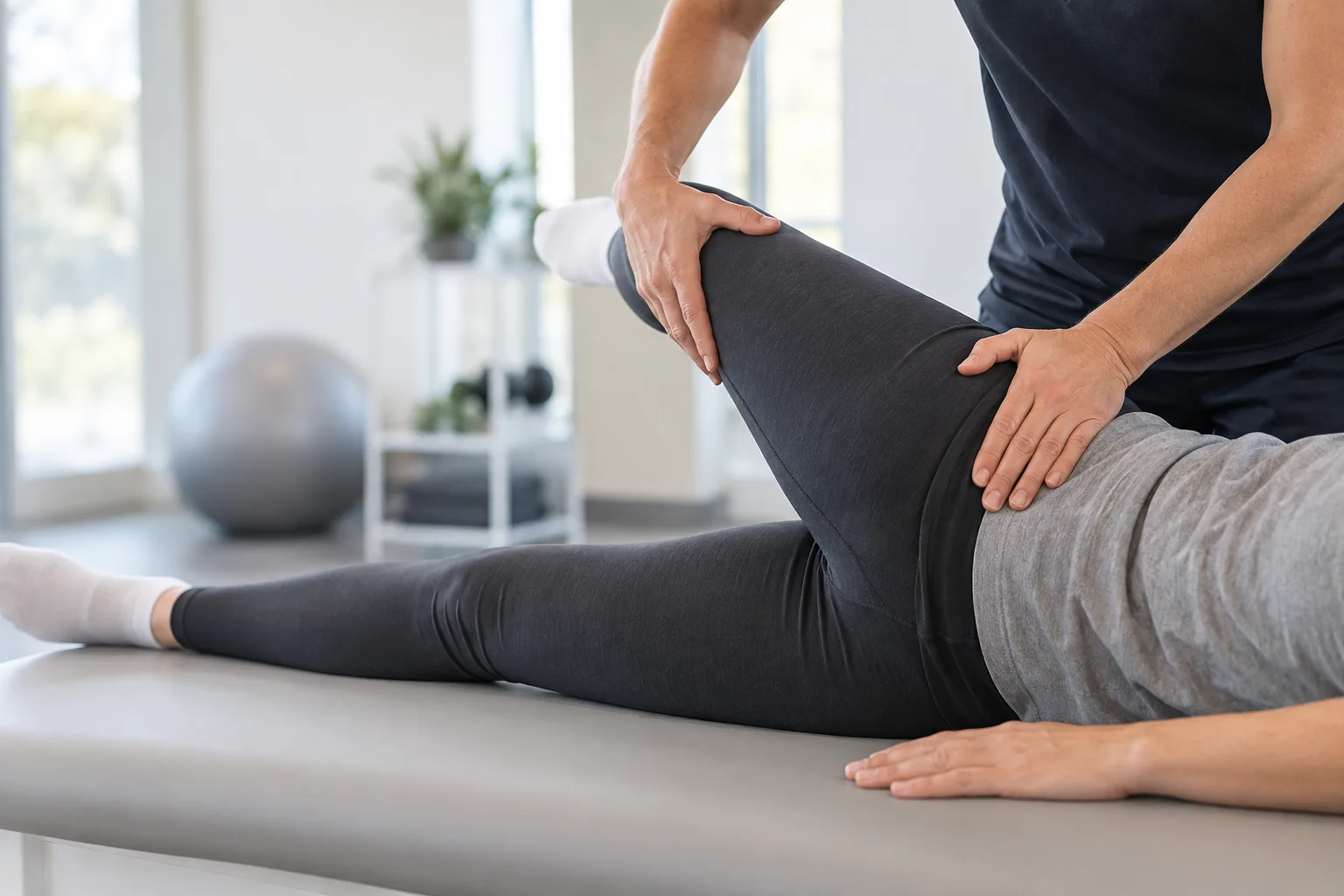
Problems an orthopaedic surgeon assesses in this area
The topics below provide an overview. Detailed exercise protocols are being developed as separate pages; these summaries are not complete exercise programmes.
Hip osteoarthritis
Symptoms and movement restrictions in diagnosed hip osteoarthritis. The topic covers everyday function, walking and activity selection before any possible surgery.
Lateral hip pain and gluteal tendons
Problems around the greater trochanter and gluteal tendons. Lateral hip pain is not always caused by the hip joint itself, so identifying the diagnosis matters.
Symptoms associated with femoroacetabular impingement
For people with diagnosed femoroacetabular impingement syndrome. Bone shape on imaging alone does not define rehabilitation needs or tolerated movement.
Iliopsoas-related symptoms
Diagnosed overuse problems at the front of the hip or in the groin. This topic is separate from recent muscle and tendon injuries.
Proximal hamstring tendinopathy
Chronic symptoms around the ischial tuberosity and proximal hamstring attachment. Management differs from that for an acute strain or tendon avulsion.
What to prepare before planning rehabilitation
Prepare information about walking distance, getting up from a chair, stairs and dressing. Groin, lateral hip and buttock pain do not necessarily indicate the same diagnosis.
An appropriate programme is selected for the diagnosis and current ability, rather than symptom similarity alone. If the cause is unclear, discuss it with a doctor or physiotherapist first.
Author: Tomasz Poboży - orthopaedic surgeon, MD, PhD. Educational information; it does not replace individual assessment and advice.