 Skip to content
FOR PATIENTS · HOME EXERCISES
Low back pain — exercises for patients
For adults with nonspecific low back pain, without neurological symptoms or other warning signs. Begin when severe pain has settled and you can change position comfortably. You do not have to wait until every ache has disappeared.
Tomasz Poboży, MD, PhD · 26.09.2026
When pain is stronger — a resting position
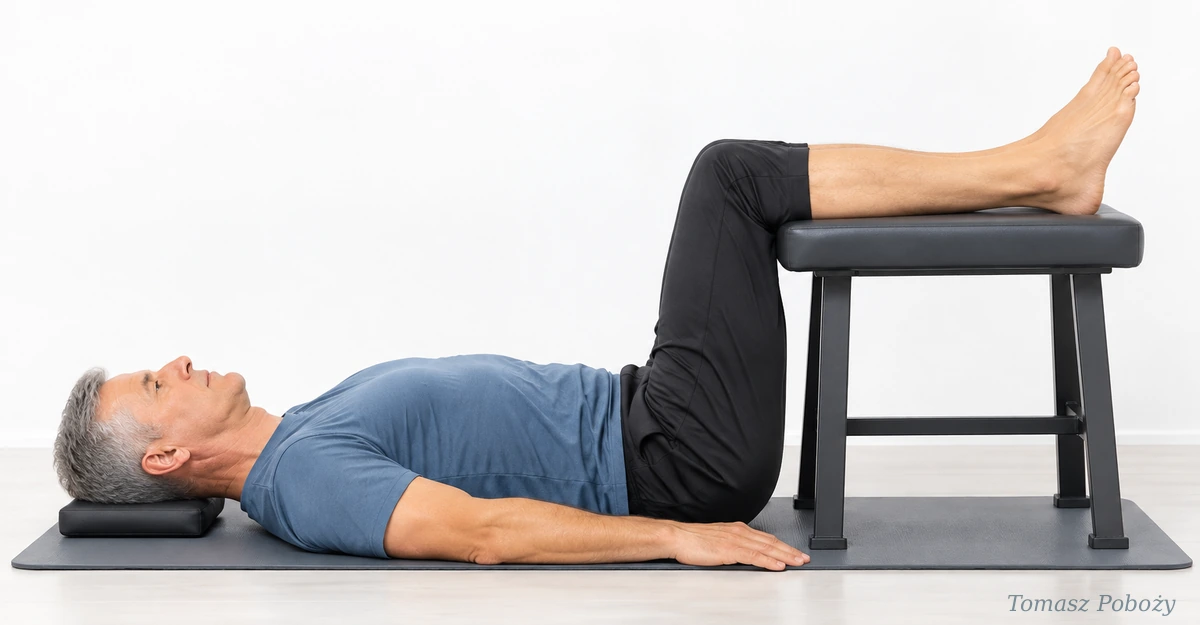
Lie on your back on a mat. Support the full length of both lower legs on a wide, stable stool without a backrest. Adjust its height so your lower legs rest horizontally, with hips and knees bent about 90°. Relax and breathe calmly.
Rest for 10–20 minutes, only if this position eases your symptoms. Then change position and return to activity you can tolerate.
This is a short rest, not a recommendation to spend the day lying down. Do not get onto the floor unless you can get up safely.
Start here — gentle movement
Choose 2–3 exercises you tolerate best. Exercises 1–4 can be done once daily. Start with one set; do not push through sharp pain.
1. Gentle pelvic tilts
Starting position
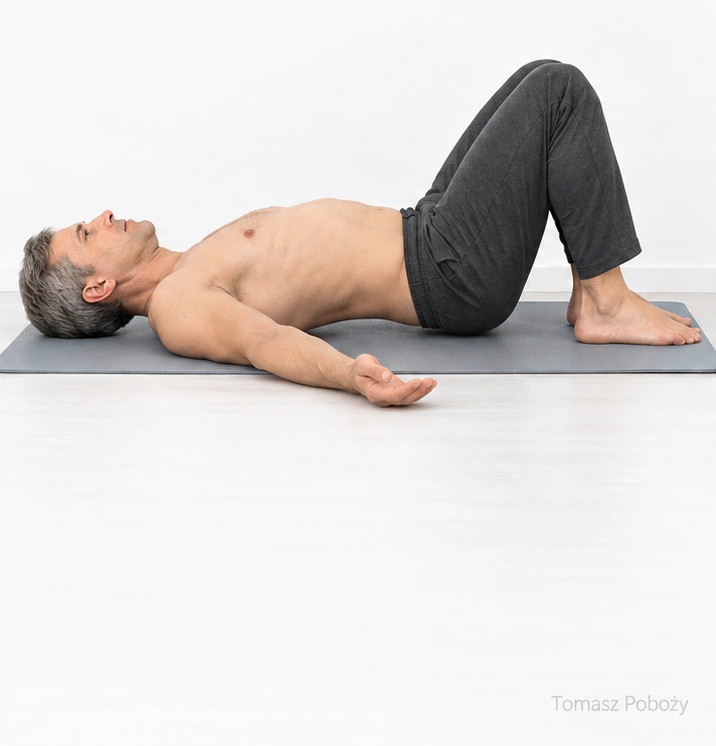
Movement, then return slowly
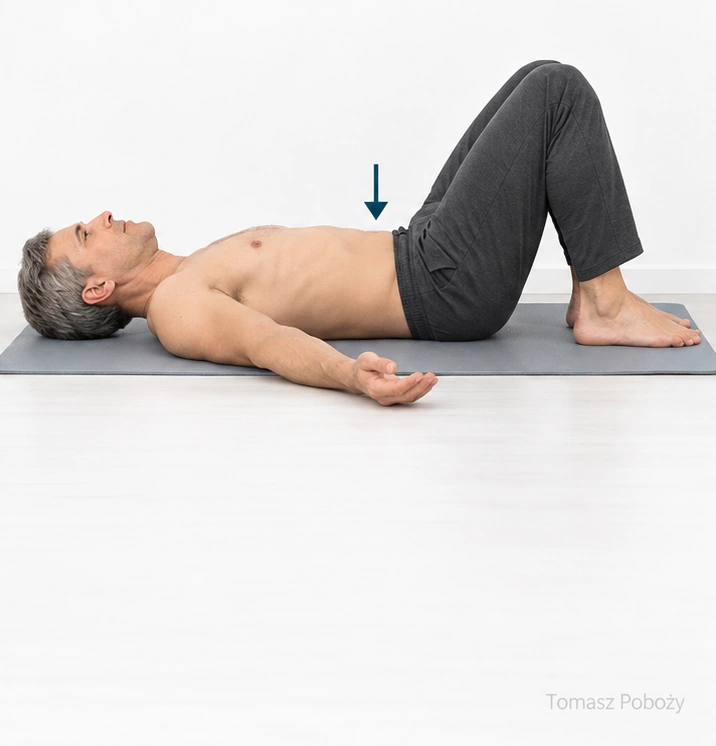
Lie on your back with knees bent and feet supported. Gently tighten your abdomen and tilt your pelvis to bring your lower back closer to the mat. Relax and return.
Starting dose: 5–10 repetitions.
Take care: Do not lift your buttocks or head.
2. Knees towards your chest
Starting position
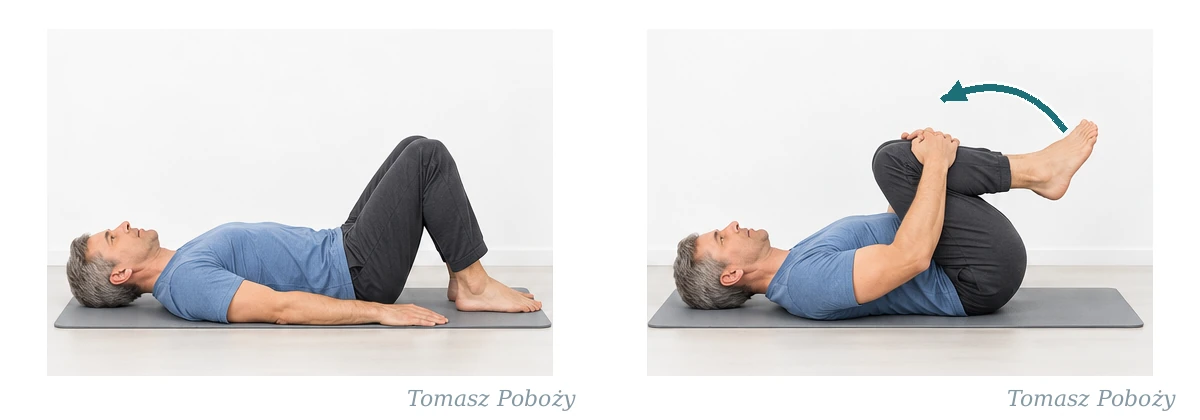
Movement, then return slowly
From back-lying, bring your bent legs up one at a time, hold them and gently draw your knees towards your chest. Hold for 3–5 seconds. Slowly return your feet to the mat.
Starting dose: 3–5 repetitions.
Take care: Do not pull sharply or force the stretch. Skip it if pain increases.
3. Knee rolls
Starting position
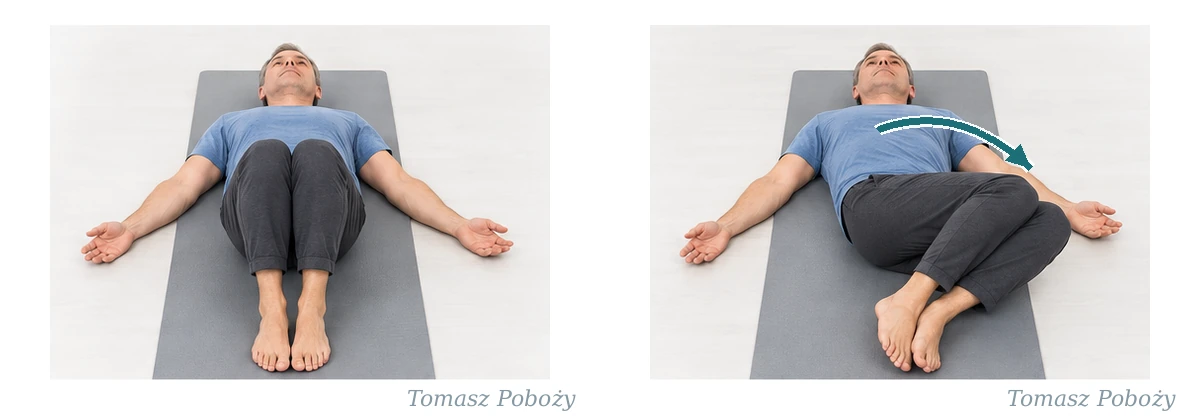
Movement, then return slowly
Bend your knees with feet on the mat. Let both knees move together towards one side while keeping your shoulders supported. Return to the centre and repeat on the other side.
Starting dose: 5 repetitions each side.
Take care: Do not force your knees to touch the floor.
4. Cat stretch
Starting position
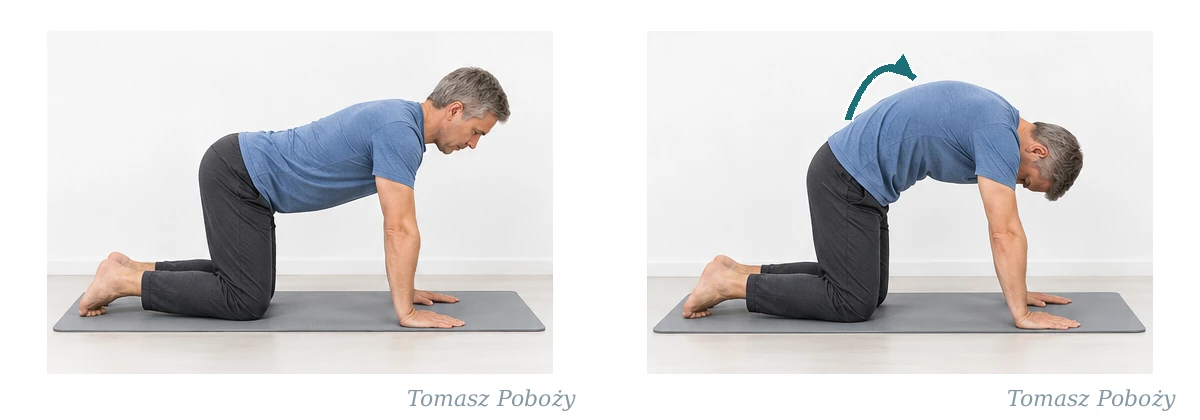
Movement, then return slowly
Place your hands below your shoulders and knees below your hips. Slowly round your back as you breathe out. Breathe in and return to a comfortable neutral position.
Starting dose: 5–8 repetitions.
Take care: Do not force your back into an extreme arch.
When it gets easier — strength and control
Add exercises 5–6 gradually, initially on 2–3 days per week. Rest for 30–60 seconds between sets.
5. Bridge — lifting your pelvis
Starting position
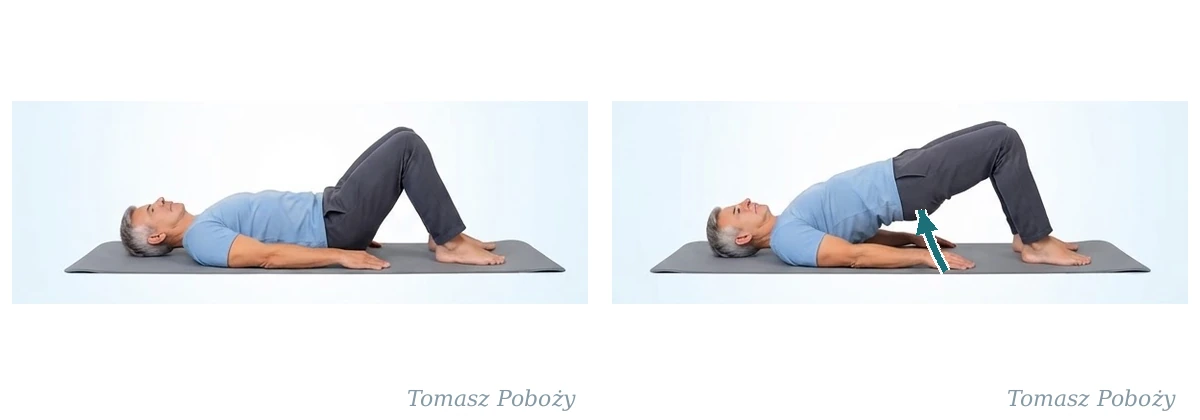
Movement, then return slowly
Lie on your back with knees bent and feet hip-width apart. Tighten your buttocks, lift your pelvis to a comfortable height and hold for 3 seconds. Lower slowly.
Starting dose: 5–8 repetitions.
Take care: Do not overarch your lower back or hold your breath.
6. Reaching on all fours
Starting position
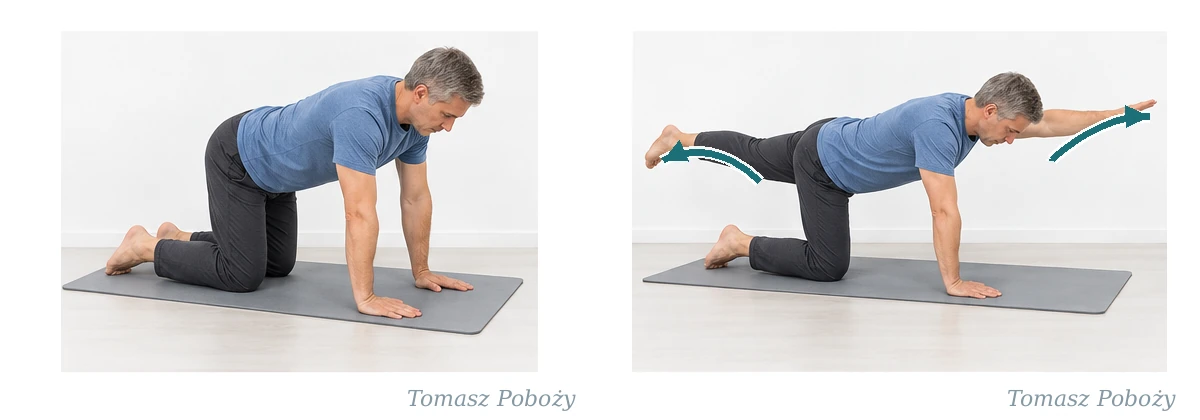
Movement, then return slowly
From all fours, reach one arm forwards and the opposite leg backwards, no higher than your trunk. Hold for 3 seconds and return. Easier option: lift only an arm.
Starting dose: 5 repetitions each side.
Take care: Keep your pelvis level. Skip this exercise if your shoulder or wrist hurts.
Additional exercises — abdominal control and daily function
Exercises 7–8 are optional additions, not a requirement for every session. Initially practise them on 2–3 days per week.
7. Abdominal control — heel slide
Starting position
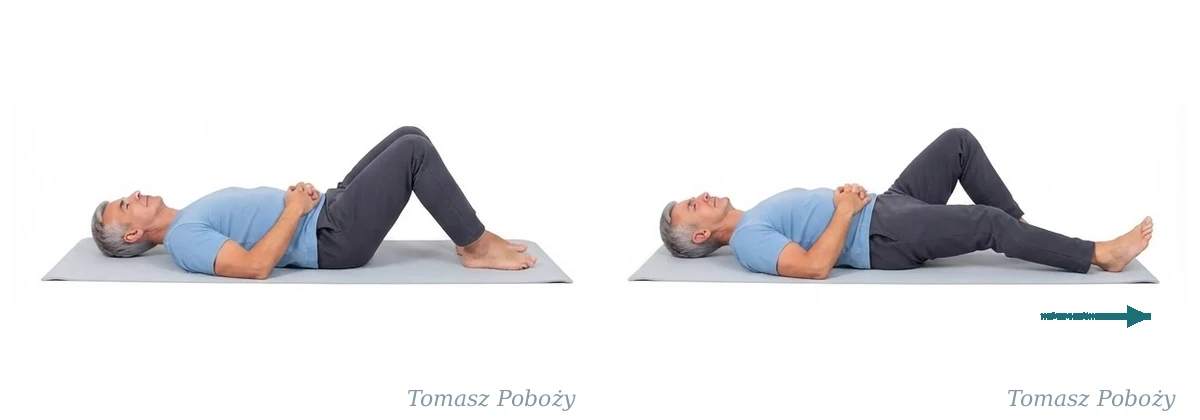
Movement, then return slowly
Lie on your back with knees bent and gently tighten your abdomen. Slide one heel along the mat, straightening your leg only as far as you can while keeping your pelvis steady. Return and change sides.
Starting dose: 5 repetitions each side.
Take care: Keep your heel on the mat. Breathe normally.
8. Sit to stand
Starting position
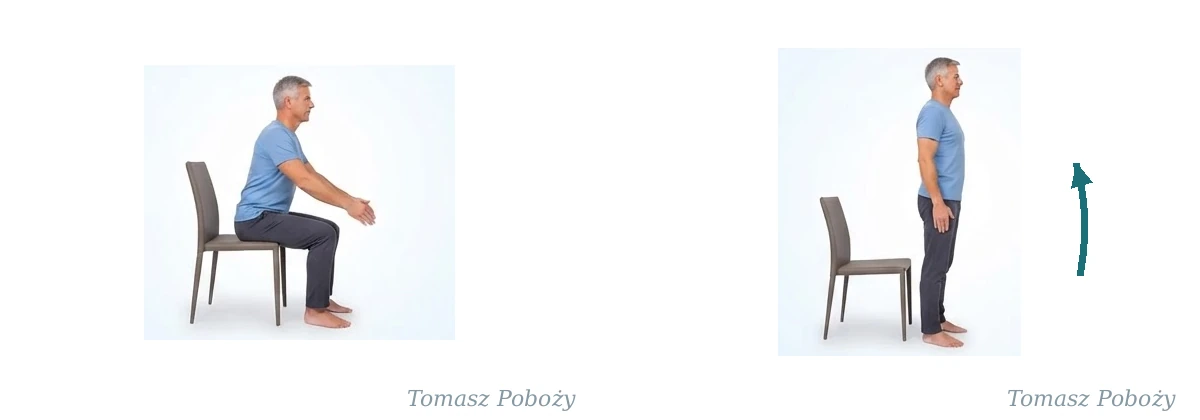
Movement, then return slowly
Place a stable chair against a wall. Sit with feet hip-width apart, lean your trunk slightly forwards and stand up. Then sit down slowly.
Starting dose: 5–8 repetitions.
Take care: Use armrests if needed; do not drop onto the seat.
How to progress
When exercises are well tolerated, add 1–2 repetitions, then consider a second set. Change one variable at a time. Walk daily — for example, start with 5–10 minutes and increase gradually.
When to reduce the dose or stop
Mild, temporary discomfort may be acceptable. Reduce the range or repetitions if symptoms persist after the session or are worse the next day. Stop and seek medical advice for new pain spreading down a leg, numbness or weakness.
No improvement over 2–4 weeks, increasing pain or difficulty doing the exercises calls for assessment and adjustment of the programme.
Listen to the podcast
An episode about low back pain, movement, investigations and warning signs that need urgent medical attention.
Read about causes and treatment of back pain (Polish) →About this programme
The selection of movements and small starting doses is an individually authored programme. It is not a compulsory routine for every spinal condition. The emphasis is on tolerable movement and a gradual return to activity.