 Skip to content
CONDITIONS AND SYMPTOMS
Foot and Ankle Conditions
Foot and ankle conditions: bunions, tendon problems, Morton’s neuroma, plantar fascia disorders, tarsal tunnel syndrome and other symptoms — with routes to diagnosis and treatment.
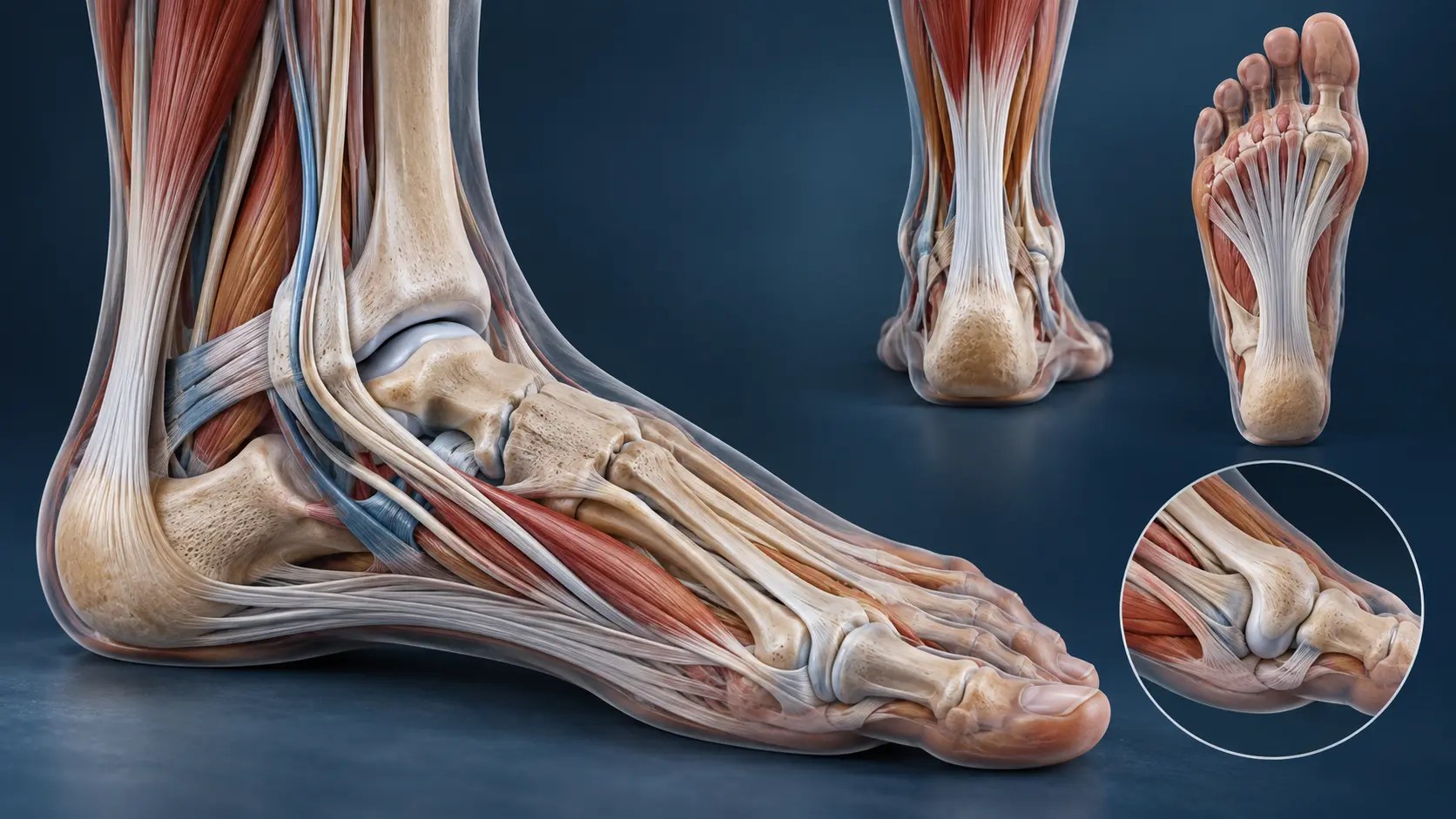
Foot or ankle pain may arise from joints, tendons, ligaments, nerves, plantar fascia or bone. This section organises common problems and leads to one main resource for each diagnosis, rather than splitting the same condition into separate diagnosis, treatment and surgery articles.
Forefoot and big toe
- Hallux valgus (in Polish) — pain, footwear problems and fixed deformity require assessment of the whole foot, not just the toe’s appearance.
- Hallux rigidus (in Polish) — pain and restricted first metatarsophalangeal joint movement require assessment of severity and effects on walking and daily activity.
- Morton’s neuroma (in Polish) — burning or shooting forefoot pain may need differentiation from other causes.
Tendons and the ankle region
- Achilles tendon (in Polish) — chronic tendinopathy and acute injury are different problems requiring different management.
- Posterior tibial tendon (in Polish) — pain and weakness on the inner side of the ankle may also be associated with altered foot alignment.
- Peroneal tendons (in Polish) — pain behind the lateral malleolus may arise from tendons but must be differentiated from other local conditions.
Ankle joint and cartilage
- Osteochondral lesion of the talus (in Polish) — persistent pain, swelling or locking after injury or during activity may require assessment of cartilage and subchondral bone.
Heel and sole
- Plantar fascia (in Polish) — first-step pain is common, but not every painful heel has the same cause.
- Tarsal tunnel syndrome (in Polish) — burning, tingling or numbness of the sole may result from tibial nerve compression and needs differentiation from other neuropathies.
Acute injury or chronic disease?
Sudden pain after a sprain, fall or abrupt movement should be distinguished from gradually developing symptoms. Fractures, sprains and other acute injuries are discussed under Injuries, while this section primarily concerns chronic conditions and overuse problems of the foot and ankle.
When does an orthopaedic surgeon consider surgery?
An operation is not a diagnosis. Its role depends on the condition, symptom severity, functional impact, deformity or injury pattern and non-operative options. Surgical indications therefore remain on individual condition pages. The Foot Surgery section organises operative methods and the scope of treatment.
Medical author
Tomasz Poboży - orthopaedic surgeon, MD, PhD — specialist in orthopaedics and musculoskeletal traumatology.
This educational material does not replace an individual consultation or medical examination. Last updated: 11 September 2026.