 Skip to content
FOR PATIENTS · REHABILITATION
Shoulder and upper arm rehabilitation after injury
A guide to shoulder and upper arm injuries selected for nonsurgical treatment. The topics distinguish the type of injury, not just the location of pain.
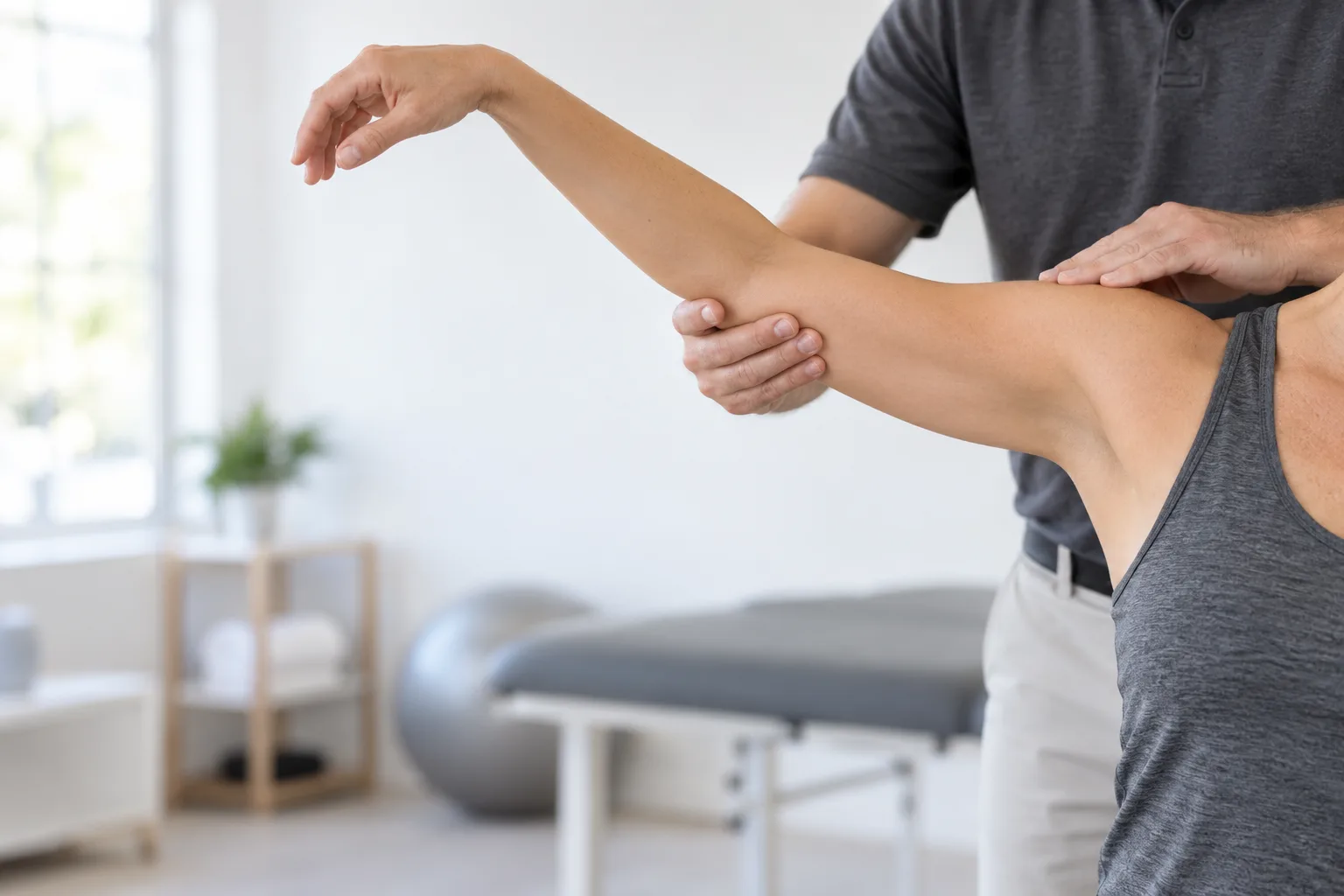
Problems an orthopaedic surgeon assesses in this area
The topics below provide an overview. Detailed exercise protocols are being developed as separate pages; these summaries are not complete exercise programmes.
Shoulder dislocation treated without surgery
Recovery after a reduced shoulder dislocation when nonsurgical treatment has been selected. Joint stability, associated injuries and prescribed movement limits matter.
Proximal humerus fracture
A separate topic for fractures selected for nonsurgical management. Rehabilitation depends on healing and the instructions for protecting the fracture.
Clavicle fracture
Restoring shoulder girdle function after a clavicle fracture treated without surgery. Resources will not replace assessment of healing or individual loading instructions.
Acromioclavicular joint injury
Return to activity after injuries to the joint between the clavicle and scapula selected for nonsurgical care. The extent of injury affects management.
Traumatic rotator cuff injury
Diagnosed injuries for which nonsurgical management has been agreed. Sudden loss of strength after injury requires assessment rather than selection of an arbitrary exercise set.
What to prepare before planning rehabilitation
Note which activities are difficult: reaching a shelf, dressing, washing your hair or working with an elevated arm. The direction of limited movement helps you discuss rehabilitation goals with your physiotherapist.
Prepare the injury date, diagnosis and instructions about protection, movement and loading. Time elapsed alone does not mean every activity is permitted. Your treating team’s individual instructions take priority.
Author: Tomasz Poboży - orthopaedic surgeon, MD, PhD. Educational information; it does not replace individual assessment and advice.