 Skip to content
FOR PATIENTS · REHABILITATION
Knee rehabilitation after injury
A guide to knee injuries selected for nonsurgical treatment. The topics distinguish the type of injury, not just the location of pain.
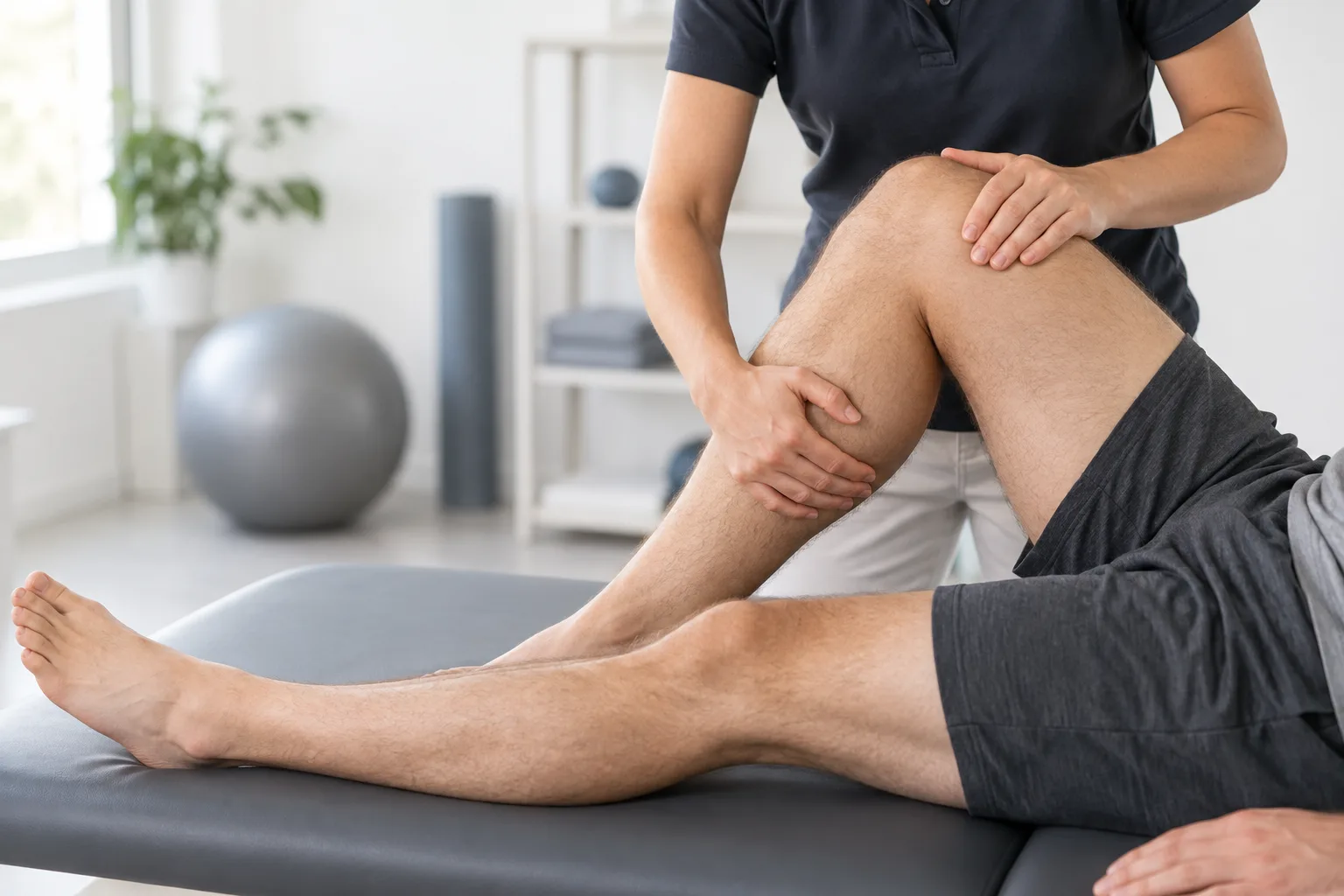
Problems an orthopaedic surgeon assesses in this area
The topics below provide an overview. Detailed exercise protocols are being developed as separate pages; these summaries are not complete exercise programmes.
Medial collateral ligament injury
Medial knee injuries managed without surgery. Injury grade and joint stability matter more than the general label of a knee sprain.
ACL injury managed without surgery
For people selected for management without ligament reconstruction. The plan should consider functional stability, associated injuries and activity goals.
Patellar dislocation
Recovery after reduction of a patellar dislocation and selection of nonsurgical care. Associated injuries and recurrence risk require assessment.
Traumatic meniscal injury
Selected injuries managed without surgery. Persistent locking or a substantial new loss of function requires assessment; this is not a rehabilitation pathway after meniscal repair.
Fractures around the knee treated without surgery
Selected stable fractures of the patella or other bones forming the knee. Movement and loading depend on the specific injury and confirmed progress of healing.
What to prepare before planning rehabilitation
Consider everyday function: walking, stairs, standing up and straightening the knee. Also tell your clinician about swelling, locking or episodes of the knee giving way.
Prepare the injury date, diagnosis and instructions about protection, movement and loading. Time elapsed alone does not mean every activity is permitted. Your treating team’s individual instructions take priority.
Author: Tomasz Poboży - orthopaedic surgeon, MD, PhD. Educational information; it does not replace individual assessment and advice.