 Skip to content
FOR PATIENTS · REHABILITATION
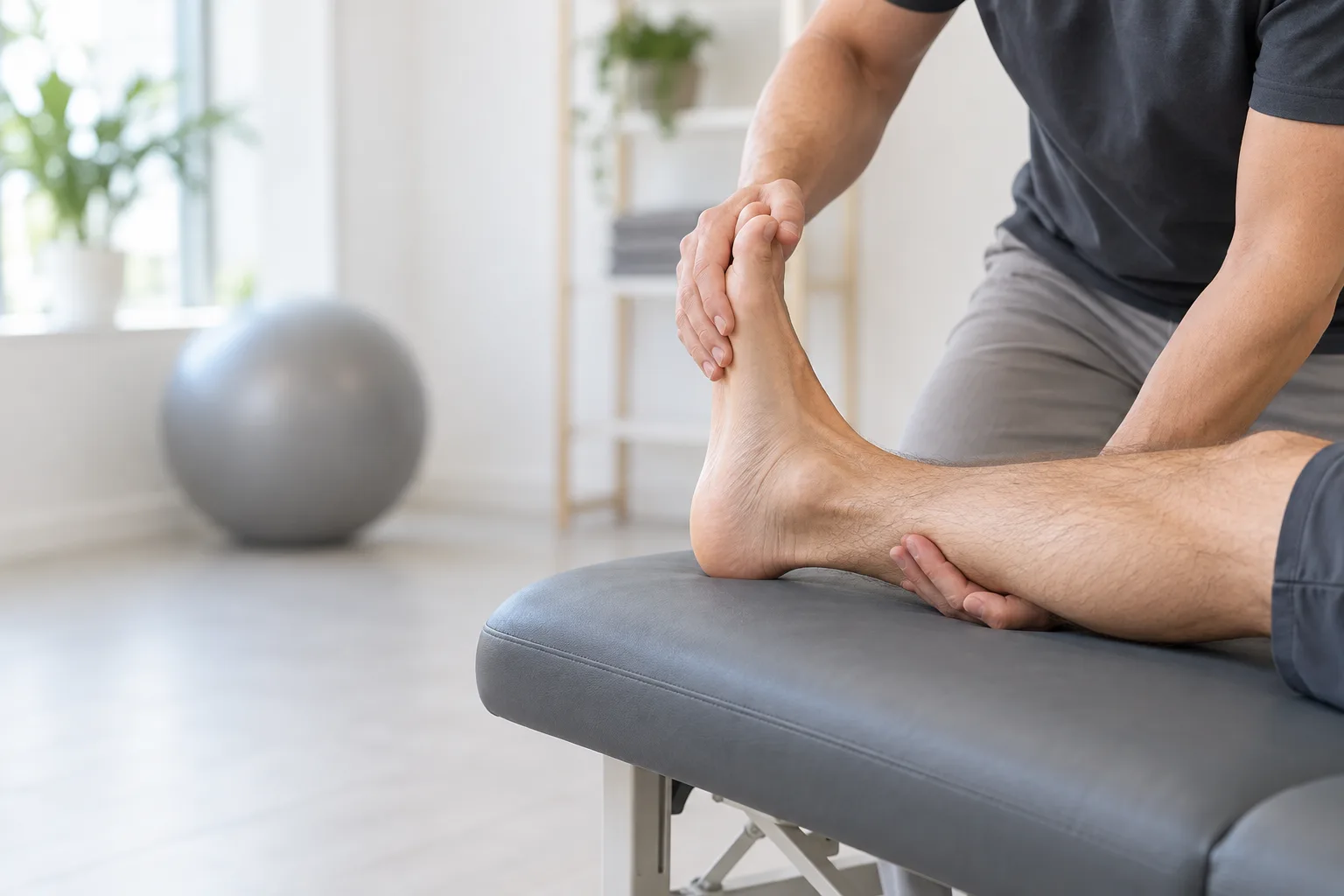
Foot and ankle rehabilitation after injury
A guide to foot and ankle injuries selected for nonsurgical treatment. The topics distinguish the type of injury, not just the location of pain.
Resources after surgery
If you have had surgery, select the protocol matching your procedure together with your clinical team. These detailed resources are intended for clinicians.
Problems an orthopaedic surgeon assesses in this area
The topics below provide an overview. Detailed exercise protocols are being developed as separate pages; these summaries are not complete exercise programmes.
Lateral ankle sprain
Injury to the ligaments on the outside of the ankle. Return to activity involves assessment of function and stability, not only resolution of swelling.
Syndesmotic ankle injury
A separate pathway for injuries assessed as stable and managed without surgery. A programme for a typical lateral sprain should not automatically be used.
Ankle fractures
Selected fractures managed without surgery. Loading, movement and withdrawal of protection must follow the instructions for the particular fracture.
Foot fractures
Restoring walking after fractures treated without surgery, taking the particular bone and location into account. Different foot fractures need different protection.
Achilles rupture treated without surgery
Rehabilitation within an agreed functional treatment pathway for tendon rupture. This differs from tendinopathy; exercises and foot position must match the prescribed protocol.
Calf muscle strain
Recovery following a diagnosed calf muscle injury. The cause of pain and swelling in this area needs to be established before starting a programme.
What to prepare before planning rehabilitation
Prepare information about walking, standing, footwear and the terrain where difficulties occur. It matters whether symptoms involve the heel, Achilles tendon or ankle joint itself.
Prepare the injury date, diagnosis and instructions about protection, movement and loading. Time elapsed alone does not mean every activity is permitted. Your treating team’s individual instructions take priority.
Author: Tomasz Poboży - orthopaedic surgeon, MD, PhD. Educational information; it does not replace individual assessment and advice.