 Skip to content
FOR DOCTORS AND PHYSIOTHERAPISTS
Diagnostics and Clinical Pathways
Clinical examination, imaging selection and interpretation within structured decision pathways.
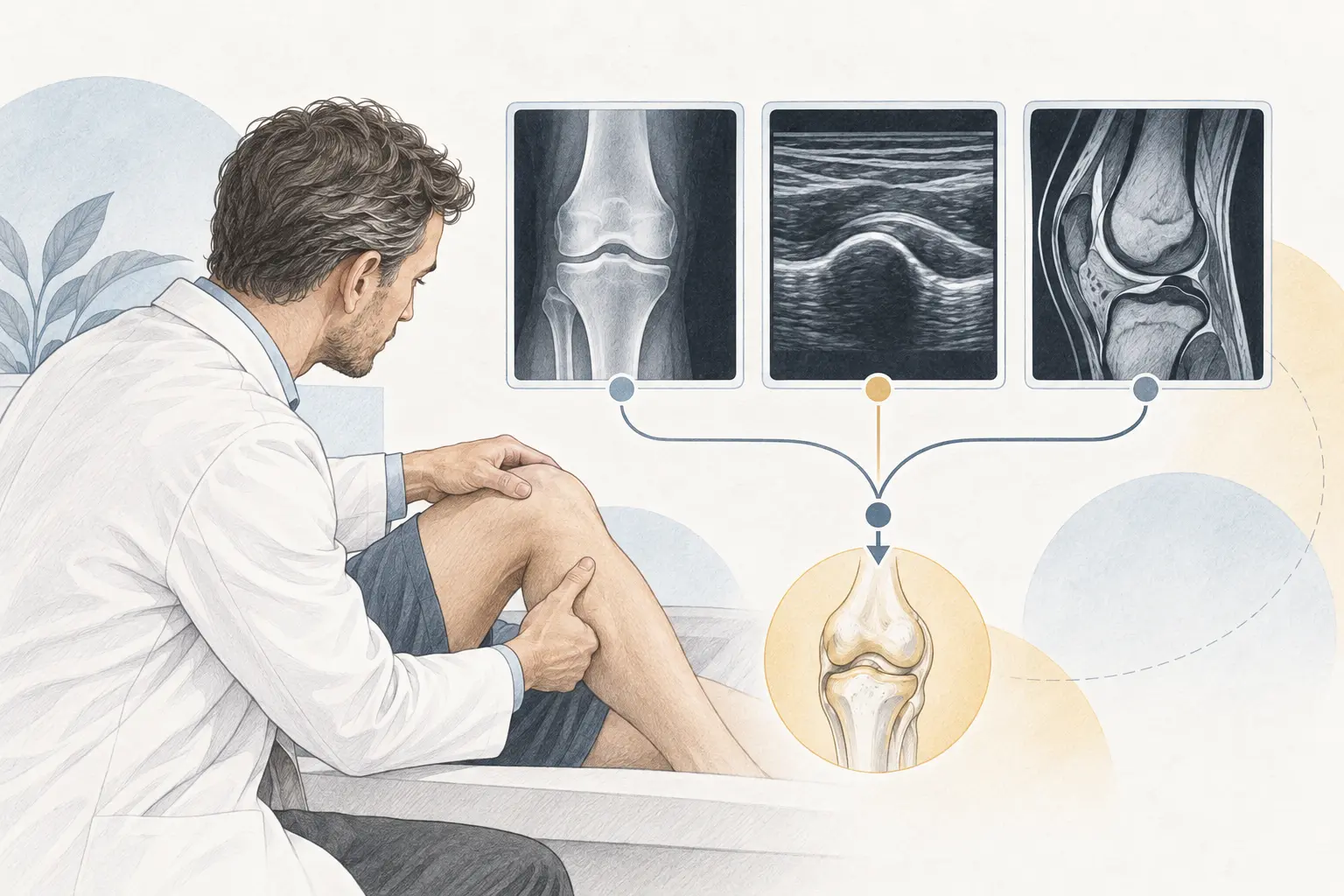
How an orthopaedic surgeon moves from symptoms to a clinical decision
A diagnostic pathway does not replace examining the patient. It organises the sequence: recognising red flags, taking a history, functional assessment, forming hypotheses and choosing a test whose result can actually change treatment.
1. Clinical assessment
History, injury mechanism, pain location, functional limitation, movement assessment, provocation tests and assessment of neurological and systemic symptoms.
2. Selecting an investigation
X-rays, ultrasound, MRI, CT and EMG have different indications. Selection should follow the clinical question rather than availability alone.
3. Correlating the result
The report must be considered alongside the clinical picture. An imaging abnormality is not always the source of symptoms or an indication for a procedure.
Scope of clinical pathways
- shoulder and shoulder girdle,
- elbow, wrist and hand numbness,
- hip and groin,
- knee and limb alignment disorders,
- ankle and foot,
- postoperative pain, periprosthetic infection and nonunion,
- choosing between X-rays, ultrasound, MRI and CT.
Related sections
Clinical and Operative Orthopaedics · Musculoskeletal Ultrasound · Research Updates and Literature
Content prepared by: Tomasz Poboży - orthopaedic surgeon.