 Skip to content
INJURIES AND FRACTURES
Muscle and Tendon Injuries
Muscle and tendon injuries: distinguishing overload from an acute partial or complete tear, when ultrasound or MRI is needed and which symptoms require prompt assessment.
Common situations
- Hamstring tear (in Polish) — from injury to assessment of extent and decisions about treatment.
- Distal biceps tendon rupture (in Polish) — severity, activity level and time since injury influence management.
- Achilles tendon (in Polish) — chronic pain usually indicates tendinopathy, but sudden injury with loss of function requires exclusion of rupture.
Partial or complete tear?
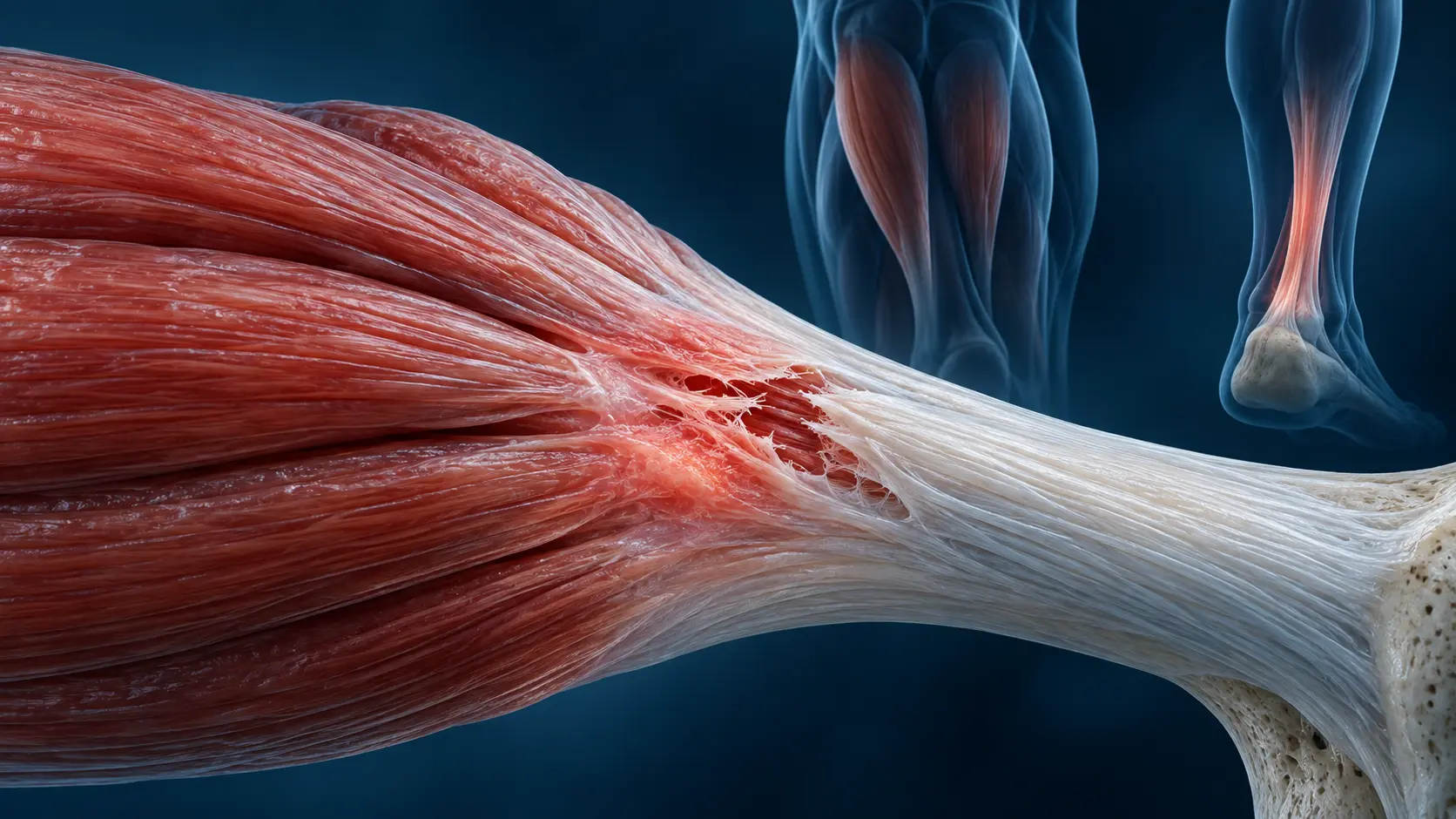
Not every acute pain means complete rupture. Injury may involve a few fibres, a larger partial tear or complete discontinuity. Location, size, retraction, loss of strength and the patient’s functional demands matter.
Which tests might an orthopaedic surgeon need?
Clinical examination is the starting point. Ultrasound shows many superficial muscles and tendons and allows dynamic assessment. MRI is particularly useful for defining a deeper injury, assessing an attachment or planning treatment. Selection therefore depends on the structure and clinical question. See also Ultrasound After Muscle Injury — When Is It Useful? (in Polish).
When is quicker assessment needed?
- marked loss of strength after sudden injury,
- a palpable gap or altered muscle or tendon contour,
- large, rapidly increasing bruising,
- inability to perform a previously possible movement,
- injury in a highly active person when outcome depends on timely decisions.
Treatment
Many partial muscle and tendon injuries are treated without surgery, gradually restoring movement, strength and load tolerance. For some complete ruptures, surgery offers a better chance of functional recovery. Indications should not be transferred from one tendon to another — decisions are injury-specific.
Detailed descriptions are available in separate resources. Depending on the problem, the relevant body area or sports medicine section may also be useful.
Medical author
Tomasz Poboży - orthopaedic surgeon, MD, PhD — specialist in orthopaedics and musculoskeletal traumatology.
This educational material does not replace an individual consultation or medical examination. Last updated: 11 September 2026.