 Skip to content
FOR PATIENTS · REHABILITATION
Hip and pelvis rehabilitation after injury
A guide to hip and pelvis injuries selected for nonsurgical treatment. The topics distinguish the type of injury, not just the location of pain.
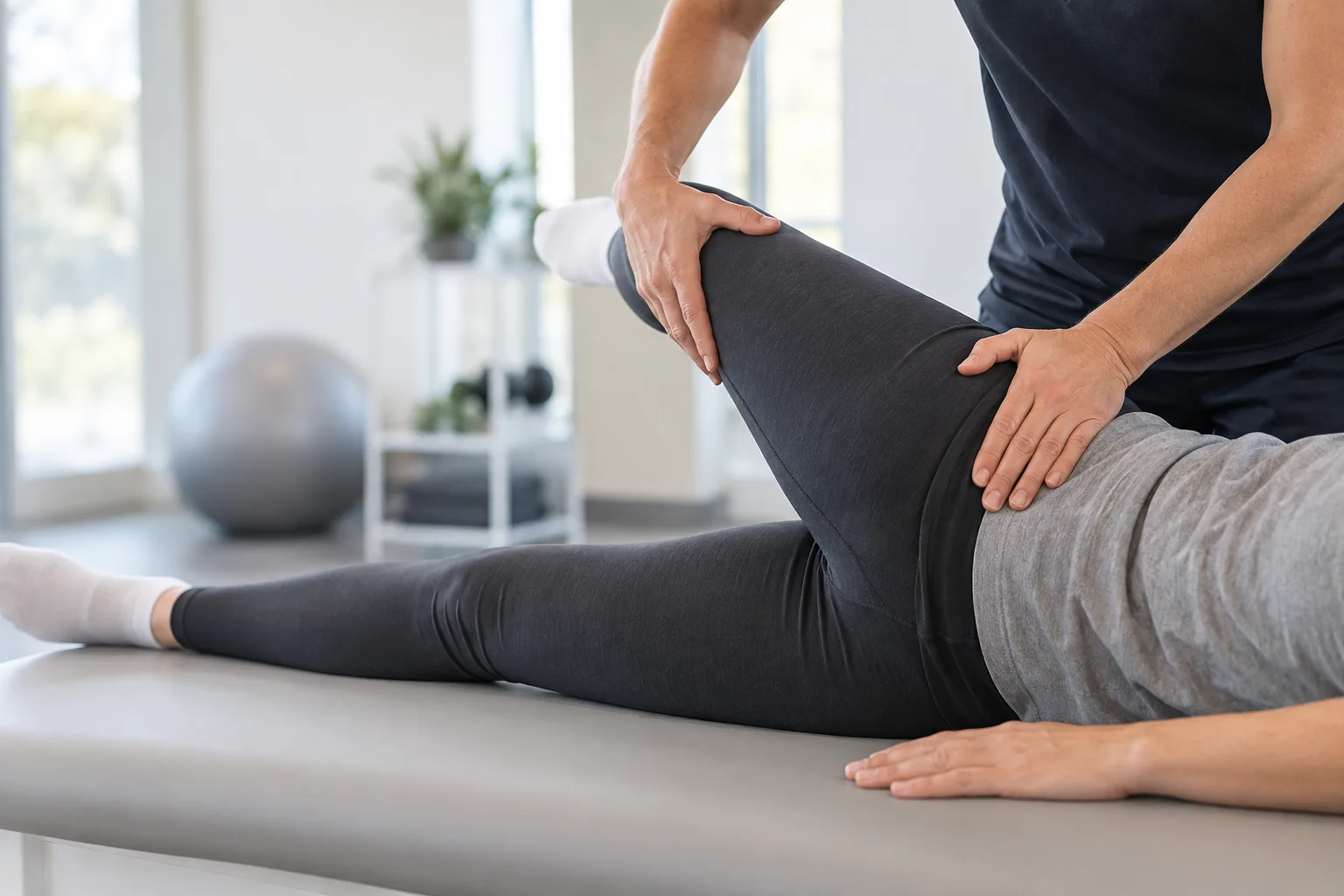
Problems an orthopaedic surgeon assesses in this area
The topics below provide an overview. Detailed exercise protocols are being developed as separate pages; these summaries are not complete exercise programmes.
Adductor muscle injury
Return to activity following a diagnosed adductor strain. Resources will distinguish a recent injury from chronic groin symptoms.
Hamstring muscle injury
Injuries of the posterior thigh muscles managed without surgery. Location and extent matter, particularly when the tendon is also involved.
Hip flexor injury
Restoring movement after anterior hip muscle injuries selected for nonsurgical management. This topic does not replace assessment of groin pain following injury.
Quadriceps contusion or strain
Problems at the front of the thigh following a direct blow or strain. Programme selection depends on the diagnosis and recovery of function.
Stable pelvic fractures
A pathway for fractures assessed as stable and selected for nonsurgical care. Weight-bearing instructions must follow the records and treating clinician’s advice.
What to prepare before planning rehabilitation
Prepare information about walking distance, getting up from a chair, stairs and dressing. Groin, lateral hip and buttock pain do not necessarily indicate the same diagnosis.
Prepare the injury date, diagnosis and instructions about protection, movement and loading. Time elapsed alone does not mean every activity is permitted. Your treating team’s individual instructions take priority.
Author: Tomasz Poboży - orthopaedic surgeon, MD, PhD. Educational information; it does not replace individual assessment and advice.