 Skip to content
FOR PATIENTS · REHABILITATION
Knee rehabilitation without injury
A guide to knee problems without a single injury. Find the topic that matches the established diagnosis before choosing a detailed exercise programme.
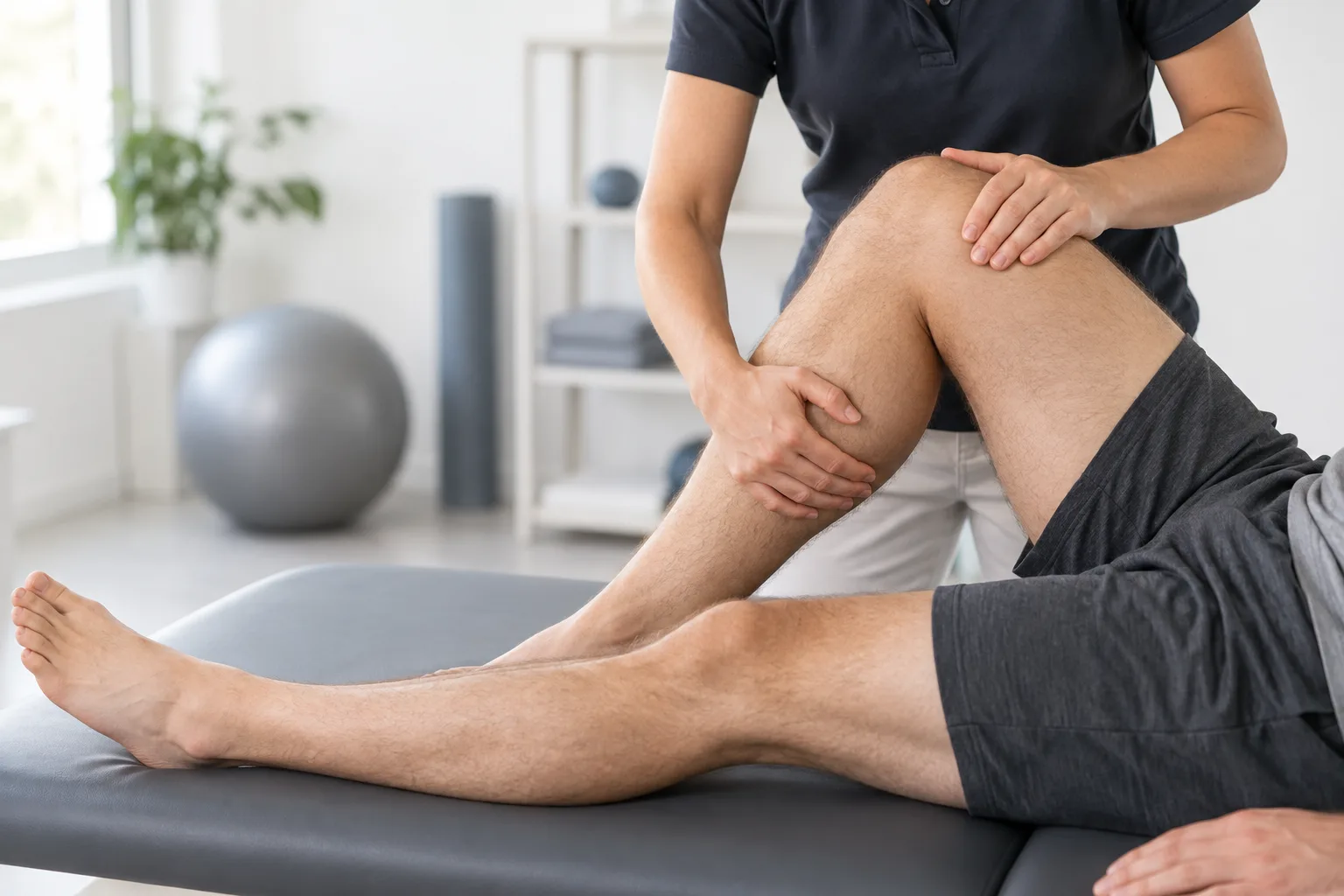
Problems an orthopaedic surgeon assesses in this area
The topics below provide an overview. Detailed exercise protocols are being developed as separate pages; these summaries are not complete exercise programmes.
Knee osteoarthritis
Movement, strength and function in diagnosed knee osteoarthritis. Assessment considers walking and everyday activities, rather than the X-ray appearance alone.
Patellofemoral pain
Pain at the front of the knee around the patella. This should be distinguished from a recent patellar dislocation, which has a separate injury pathway.
Patellar tendinopathy
Overuse symptoms of the knee extensor mechanism, often called jumper’s knee. Resources will distinguish everyday loading from sport-related tasks.
Degenerative meniscal changes
Meniscal problems without a clear single injury. MRI findings are considered alongside symptoms and examination; this is not a programme for recovery after meniscal repair.
Iliotibial band-related symptoms
Overuse problems at the outside of the knee. The relevant topic is selected after distinguishing these from ligament injuries, meniscal problems and other causes of pain.
What to prepare before planning rehabilitation
Consider everyday function: walking, stairs, standing up and straightening the knee. Also tell your clinician about swelling, locking or episodes of the knee giving way.
An appropriate programme is selected for the diagnosis and current ability, rather than symptom similarity alone. If the cause is unclear, discuss it with a doctor or physiotherapist first.
Author: Tomasz Poboży - orthopaedic surgeon, MD, PhD. Educational information; it does not replace individual assessment and advice.