 Skip to content
Musculoskeletal Ultrasound — Warsaw
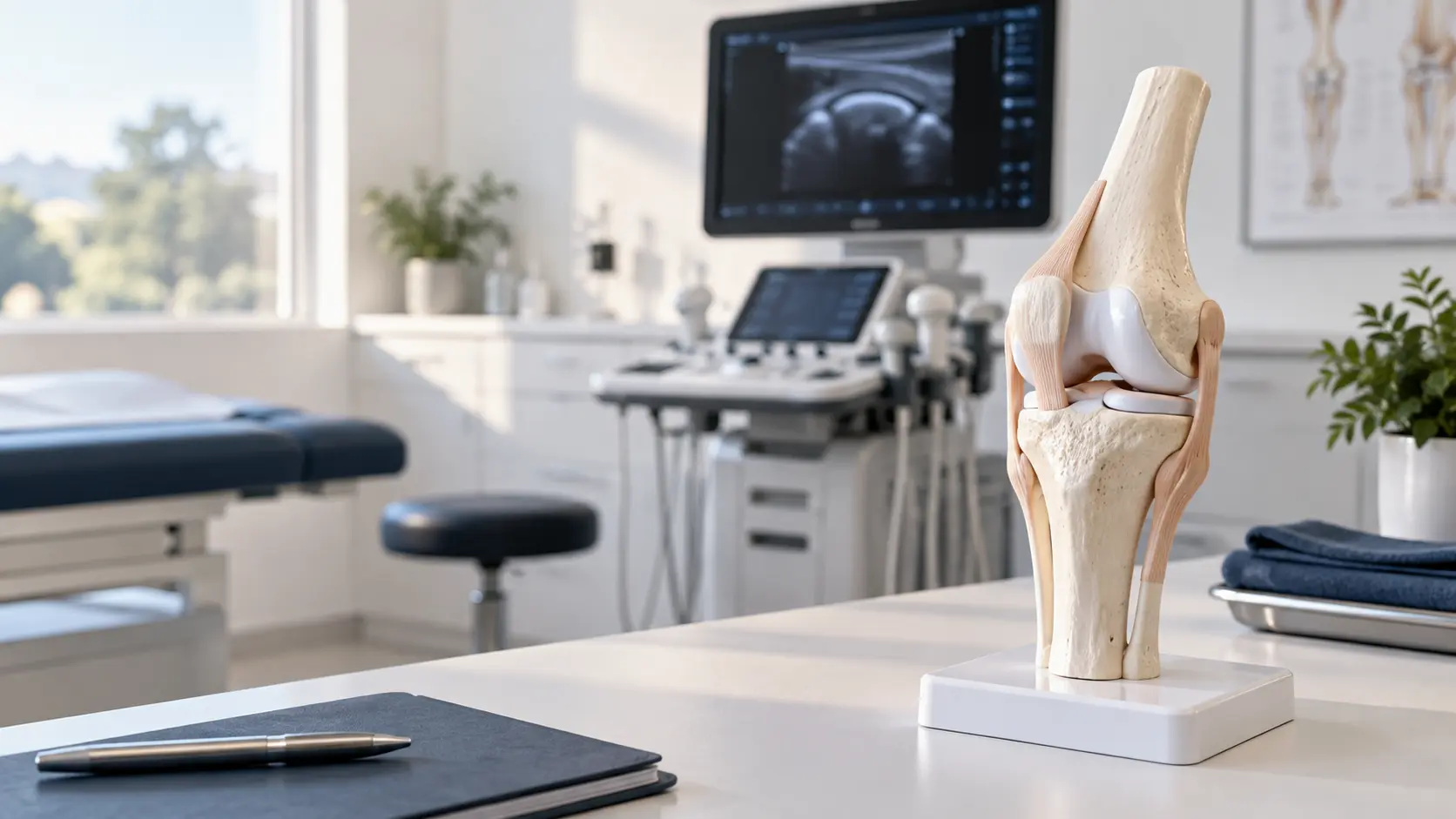
Musculoskeletal ultrasound in Warsaw: when it is useful, what it can assess, its limitations and when X-ray, MRI, CT or another test may be more appropriate. Consultations with Tomasz Poboży, MD, PhD.
When is ultrasound particularly useful?
Ultrasound can assess many superficial structures and, unlike most imaging tests, can be performed dynamically during movement. It is used for the shoulder, elbow, wrist and hand, hip region, knee, ankle and foot, as well as tendons and muscles.
- suspected tendon injury or overload;
- soft-tissue pain and swelling;
- bursae and joint effusion;
- selected ligament and periarticular injuries;
- peripheral nerves, including the median nerve at the carpal tunnel;
- follow-up when ultrasound can answer a specific clinical question.
Ultrasound does not replace every other imaging test
Not every musculoskeletal problem requires ultrasound. X-ray is the appropriate first test for many injuries and degenerative problems. MRI or CT may be more useful for deeper structures, bone injury, bone marrow, cartilage and selected intra-articular pathology. Imaging should be chosen to answer the clinical question rather than using one test for every type of pain.
What does dynamic examination add?
Ultrasound allows a structure to be observed during movement. This may demonstrate tendon snapping, tissue impingement or behaviour that is less apparent at rest. It is therefore most useful as part of a musculoskeletal examination rather than simply as a static image.
What happens during a consultation with ultrasound?
- History: symptoms, onset, aggravating factors, injury and previous treatment.
- Clinical examination: movement, strength, stability and targeted tests.
- Problem-focused ultrasound: examination of the relevant region, often dynamically and comparatively.
- Integration of findings: whether ultrasound explains the symptoms and whether X-ray, MRI, CT, EMG or another test is needed.
- Treatment plan: next steps selected according to the diagnosis and severity.
Ultrasound-guided procedures
Ultrasound can guide a needle during selected procedures by showing its relationship to nerves, tendons, vessels, bursae and joints. The indication for a procedure must come from the diagnosis; seeing an abnormality on ultrasound is not by itself an indication for injection.
Commonly examined regions
- Shoulder and upper limb: rotator cuff, long head of biceps, bursae, elbow, wrist, hand and selected peripheral nerves.
- Knee and hip region: effusion, tendons, selected ligamentous and periarticular structures, bursae and entheses.
- Ankle and foot: tendons, ligaments, plantar fascia, soft tissues and selected post-traumatic abnormalities.
Median nerve ultrasound and carpal tunnel syndrome
Ultrasound can assess the median nerve at the carpal tunnel and can help in selected diagnostic situations, but it is not mandatory for every patient with typical symptoms. Diagnosis starts with the clinical picture; ultrasound and neurophysiology are selected when they may change diagnosis, severity assessment or treatment planning.
Experience in musculoskeletal ultrasound
I have performed musculoskeletal ultrasound since 2003 and combine ultrasound with orthopaedic assessment. My research work also includes publications on musculoskeletal ultrasound and diagnostic protocols.
Clinical practice → · About the author →
Frequently asked questions
Do I need to prepare?
Usually not. Bring previous imaging and records, especially X-rays, MRI, CT, earlier ultrasound studies and operation reports when available.
Is ultrasound better than MRI?
Neither is universally better. Ultrasound is strong for many superficial structures and dynamic assessment; MRI provides broader assessment of deeper structures, bone marrow and the interior of joints.
Can consultation and ultrasound be performed at the same visit?
When ultrasound is clinically indicated and available at the chosen location, it may form part of the consultation. Current Warsaw locations and booking information are listed on Orthopaedic Surgeon Warsaw.
Related: Orthopaedic Surgeon Warsaw · Injection treatments · For patients
Author
Tomasz Poboży - orthopaedic surgeon, MD, PhD — specialist in orthopaedics and musculoskeletal trauma.