 Skip to content
INJURIES AND FRACTURES
Ankle Injuries
Ankle injuries: sprains, suspected fractures and osteochondral injuries. Selecting tests and recognising when X-rays, ultrasound, MRI or quicker assessment is needed.
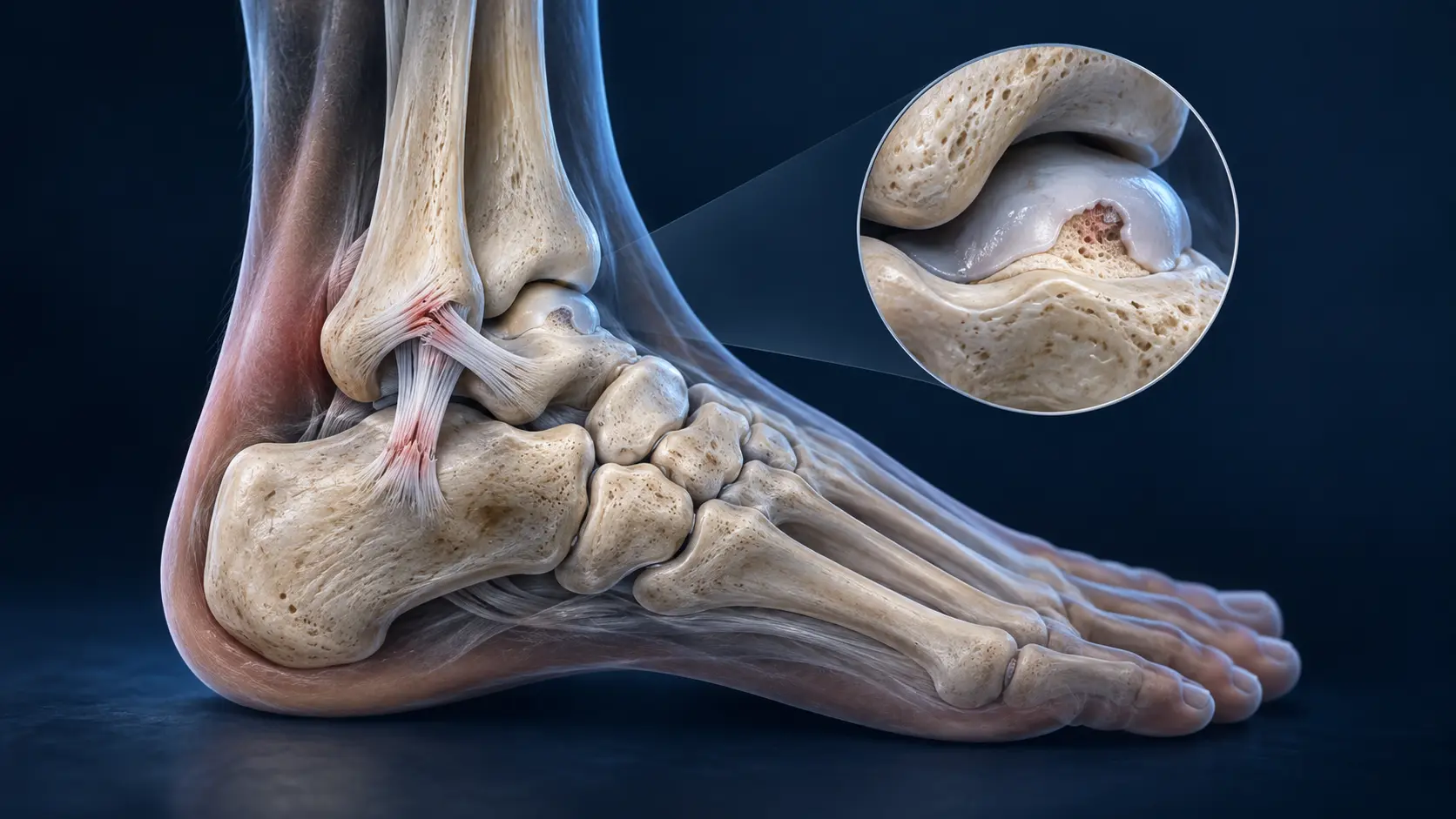
Ankle sprain
A typical sprain may cause pain, swelling, bruising and temporary difficulty bearing weight. Not every sprain requires MRI. First assess the possibility of fracture and joint stability. See Sprained Ankle — When Are X-rays, Ultrasound or MRI Needed? (in Polish).
When should more than a simple sprain be suspected?
- inability to bear weight immediately after injury and afterwards,
- marked bone tenderness,
- persistent instability despite appropriate treatment,
- pain or locking that persists after acute swelling subsides,
- suspected tendon or osteochondral injury.
How does an orthopaedic surgeon choose between X-rays, ultrasound and MRI?
X-rays primarily assess bone and exclude fracture. Ultrasound dynamically examines many superficial ligaments and tendons. MRI is useful when persistent symptoms suggest deeper ligament, cartilage, bone or other damage not adequately assessed by initial examination. Tests should not automatically be ordered in the same sequence for every patient.
Osteochondral lesions of the talus
Injury may damage cartilage and underlying bone. Persistent deep joint pain, swelling, clicking or locking after a sprain should raise this possibility. Read Osteochondral Lesion of the Talus — Symptoms, Diagnosis and Treatment (in Polish).
An injury around the ankle may also involve the foot
Pain after injury does not always arise from the ankle joint. A fifth metatarsal fracture can follow a similar twisting mechanism. See Fifth Metatarsal Fracture — Avulsion or Jones Fracture? (in Polish).
Return to activity
Return to sport should not depend on days since injury alone. Pain, swelling, motion, strength, stability and tolerance of activity-specific loading matter. Recurrent sprains warrant assessment for chronic instability.
This section concerns acute ankle injuries. Chronic foot and ankle conditions are discussed separately, including diagnosis and treatment.
Medical author
Tomasz Poboży - orthopaedic surgeon, MD, PhD — specialist in orthopaedics and musculoskeletal traumatology.
This educational material does not replace an individual consultation or medical examination. Last updated: 11 September 2026.