 Skip to content
CONDITIONS AND SYMPTOMS
Knee Conditions
Pain, swelling, stiffness, clicking or limited knee movement can result from different problems. This section leads to key resources on common knee conditions and symptoms.
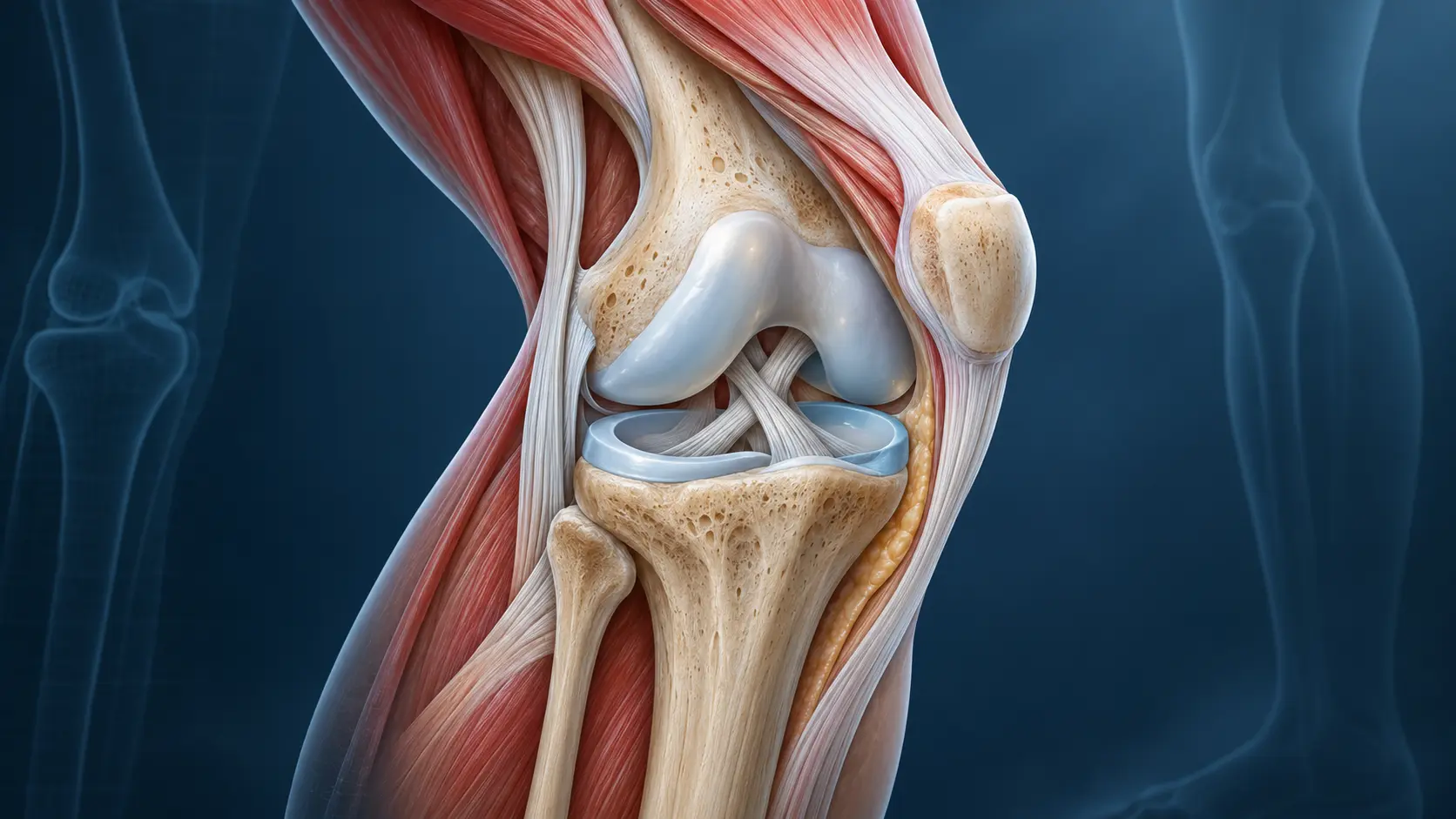
Common knee problems
Meniscus Tears — patient guide and podcast series: understand MRI findings, explore non-surgical treatment and learn when surgery may be considered.
- Knee osteoarthritis (in Polish) — pain, stiffness, intermittent swelling and gradually reduced function; treatment is selected for symptoms and the patient’s needs.
- Patellofemoral pain (in Polish) — a common cause of anterior knee pain, especially on stairs, during squats and with prolonged sitting.
- Baker’s cyst (in Polish) — a fluid collection behind the knee, often associated with a problem causing joint effusion.
- Joint effusion — “water on the knee” (in Polish) — a symptom that may result from overload, injury, osteoarthritis, inflammation or another joint problem.
- Posterior knee pain and the semimembranosus tendon (in Polish) — one extra-articular cause of pain behind the knee.
Overuse and running-related problems
- Patellar tendinopathy (“jumper’s knee”) (in Polish) — well-localised pain below the kneecap, aggravated by jumping, running and dynamic loading.
- Pes anserine pain (in Polish) — pain on the inner tibia below the joint line, which may mimic a meniscal problem.
- Iliotibial band syndrome (in Polish) — a common cause of lateral knee pain in runners.
If you do not yet know the cause
If the diagnosis is not established, start with Knee Pain — Causes and Diagnosis (in Polish). Pain location, onset, swelling, locking or instability help guide examination, but a single symptom does not replace assessment of the whole knee.
How does an orthopaedic surgeon select tests?
X-rays are usually the initial investigation for chronic knee pain. Further imaging depends on the clinical question: ultrasound is useful for effusion, Baker’s cyst and many superficial structures, while MRI is more relevant for selected intra-articular problems. Read Knee Ultrasound — What Does It Show and When Is MRI Needed? (in Polish).
Injuries and sports medicine have separate pathways
Meniscal injuries, ACL injuries, patellar dislocation and other acute injuries are also accessible through Injuries and Sports Medicine and Reconstructive Surgery. These sections make it easier to move from injury mechanism and symptoms to diagnosis, treatment and return to activity.
Medical author
Tomasz Poboży - orthopaedic surgeon, MD, PhD — specialist in orthopaedics and musculoskeletal traumatology.
This educational material does not replace an individual consultation or medical examination. Last updated: 13 September 2026.