 Skip to content
Hip Replacement — Warsaw
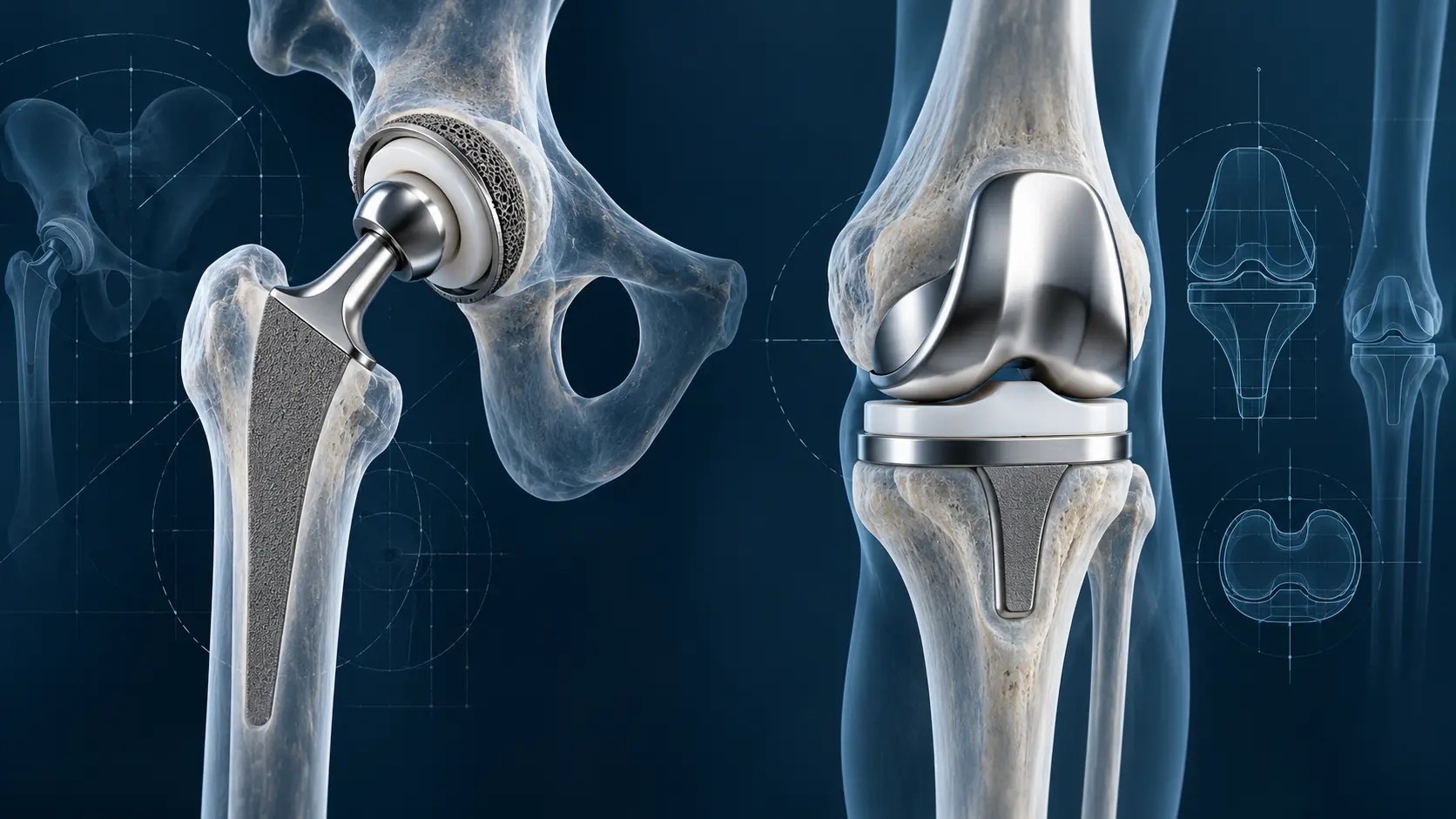
Hip replacement in Warsaw: assessment and surgery at Medicover Hospital in Wilanów. Find out how to book a consultation, prepare your records and obtain a current quotation and treatment date.
Hip replacement in Warsaw — from consultation to surgery
After individual surgical assessment, I perform hip replacement at Medicover Hospital in Wilanów, 5 Rzeczypospolitej Avenue, Warsaw. An appointment for assessment is the first step in discussing whether surgery is appropriate and planning treatment.
- Book an assessment. Current consultation locations and appointment details are listed on Orthopaedic Surgeon Warsaw.
- Discuss the treatment plan. Bring your available imaging, previous treatment records and medication list. The consultation covers the indication for surgery, the proposed procedure, expected benefits, limitations and risks.
- Confirm the quotation and date with the hospital. Ask for an individual quotation and check which services it includes, such as the implant, anaesthesia, hospital stay, physiotherapy and follow-up.
- Complete the agreed preparation. Required tests and consultations are specified individually by the treating team and the anaesthetist.
How can I check the cost and available dates?
For the current cost of hip replacement and available dates, contact the hospital after assessment and clarification of the treatment plan. Confirm the quotation, what is included and the booking arrangements before committing to surgery. Contact details are available on the Warsaw appointments page.
When is hip replacement considered?
Hip replacement may be considered when pain, stiffness, loss of function or progressive deformity substantially affects quality of life and appropriate non-operative treatment is ineffective or unsuitable. The decision is not based on an X-ray alone.
Is the anterior approach always better?
No single surgical approach is best for every patient. The choice should take account of anatomy, deformity, bone quality, comorbidities and the surgeon’s experience.
How does assessment for hip replacement work?
- Symptoms and function: pain, stiffness, walking distance, sleep, work and daily activities.
- Clinical examination: range of motion, gait, contractures, limb length, strength and possible sources of pain outside the hip.
- Imaging: usually current X-rays; MRI or other tests only when they answer an additional diagnostic question.
- Previous treatment: what has been tried and whether it produced meaningful improvement.
- Discussion of surgery: expected benefits, limitations, risks and perioperative planning.
What should you bring?
- current hip and pelvic X-rays, if available;
- previous MRI, CT or other imaging and reports;
- records of previous operations and procedures;
- a medication list and important medical conditions;
- information about previous treatment and its effect.
When does hip pain require further assessment?
Assessment is particularly useful when groin, lateral hip or buttock pain persists and limits walking, dressing, rising from a chair, stairs or sport. Increasing stiffness, limping, night pain, reduced walking distance or worsening function despite treatment are also relevant. After trauma, inability to bear weight, severe pain or suspected fracture requires more urgent assessment.
How is hip pain investigated?
The first step is to determine whether pain comes from the hip joint, surrounding soft tissues, lumbar spine, sacroiliac region or another source. Pain location helps guide assessment but does not establish the diagnosis on its own.
X-ray
Pelvic and hip radiographs are usually the first imaging test for chronic hip pain and allow assessment of osteoarthritis, joint geometry and many bony abnormalities.
Hip ultrasound
Ultrasound is not the routine first test for every case of chronic hip pain. It is useful when clinical assessment suggests a soft-tissue problem such as gluteal tendon disease, bursae or other periarticular structures, and it can guide selected procedures.
MRI and other imaging
If X-rays do not explain the symptoms and the concern is femoroacetabular impingement, labral pathology, osteonecrosis or another intra-articular problem, further imaging is selected according to the specific clinical question.
Musculoskeletal ultrasound in Warsaw →
Common causes of hip pain
- Hip osteoarthritis: progressive pain, stiffness and reduced movement, often worse with walking and loading.
- Lateral hip pain: may be related to gluteal tendinopathy and greater trochanteric pain syndrome.
- Femoroacetabular impingement and labral pathology: more common considerations in younger or active patients with groin pain during flexion and rotation.
- Osteonecrosis of the femoral head: a separate condition that may require MRI and a treatment strategy based on stage and preservation of femoral-head shape.
Non-operative treatment of hip osteoarthritis
Treatment is adapted to symptoms, function and medical conditions. Exercise, weight management when relevant and appropriate analgesic or anti-inflammatory treatment may be used. Injection treatments have different levels of evidence and should be selected for a defined indication rather than used routinely.
Clinical and research experience
Tomasz Poboży, MD, PhD is a specialist in orthopaedics and musculoskeletal trauma. His practice includes hip and knee replacement and musculoskeletal diagnostics, combined with research activity related to osteonecrosis and hip arthroplasty.
Clinical practice → · About the author →
Before and after surgery
Assessment is only the beginning. Patients also ask about implant fixation, durability and return to everyday activities. Rehabilitation is adapted to the surgical approach, fixation, general condition and individual progress.
Hip replacement — complete patient guide →
Consultations and surgery in Warsaw
After individual qualification, I perform hip replacement surgery at Medicover Hospital in Wilanów. Current consultation locations, booking details and directions are listed on Orthopaedic Surgeon Warsaw.
Frequently asked questions
Does every arthritic hip require replacement?
No. Symptoms, function and response to non-operative treatment are central to the decision. X-ray changes without substantial symptoms are not by themselves an indication for surgery.
Is MRI required before hip replacement?
Usually not. In typical advanced osteoarthritis, X-rays are the basis of assessment. MRI is used when there is an additional diagnostic question or the clinical picture is atypical.
Can ultrasound show hip osteoarthritis?
Ultrasound can assess some periarticular structures and effusion, but it is not the main test for grading hip osteoarthritis. X-ray is usually the first imaging test for chronic hip pain.
This information is educational and does not replace individual consultation and surgical assessment.
Author
Tomasz Poboży - orthopaedic surgeon, MD, PhD — specialist in orthopaedics and musculoskeletal trauma.