 Skip to content
FOR PATIENTS
Choose a Body Area
Choose the body area affected by symptoms and go to the relevant section: shoulder, elbow, hand and wrist, hip, knee, foot and ankle, or spine.
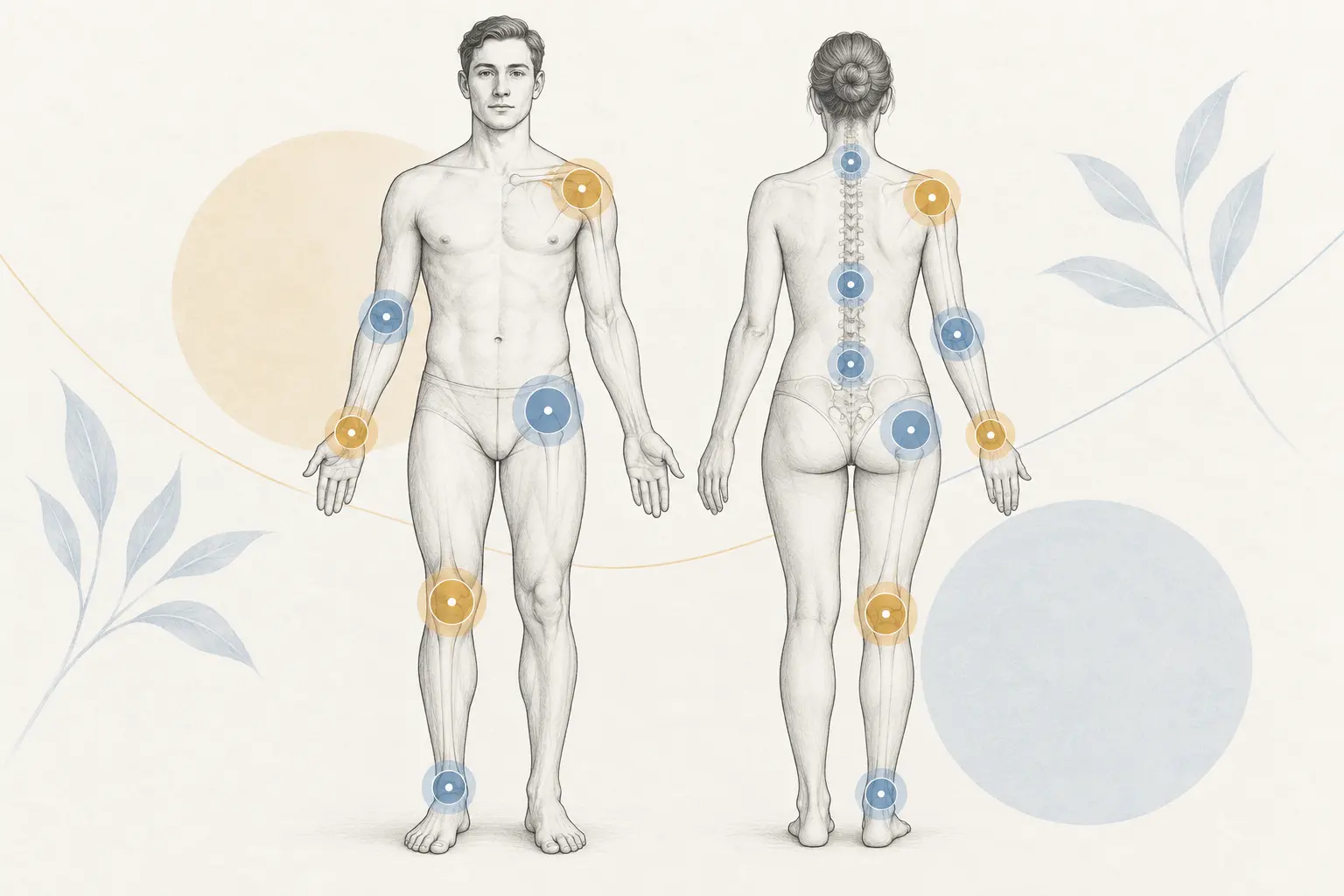
Upper limb
- Shoulder — pain, stiffness, weakness, rotator cuff problems and instability.
- Elbow — pain on the outer or inner side, stiffness, tendon and nerve problems.
- Hand and wrist — carpal tunnel syndrome, trigger finger, de Quervain’s disease, TFCC, Dupuytren’s disease and other hand problems.
Lower limb
- Hip — groin, lateral hip or buttock pain, osteoarthritis, FAI, osteonecrosis and other problems.
- Knee — pain, swelling, stiffness, effusion, patellofemoral problems and osteoarthritis.
- Foot and ankle — bunions, hallux rigidus, Morton’s neuroma, tendon, heel and nerve problems.
Spine
Spine and Back Pain (in Polish) — neck and back pain, sciatica, spinal stenosis and osteoporosis-related problems.
How does an orthopaedic surgeon assess symptoms involving several areas?
Some symptoms may be felt far from their actual source. Numbness in the hand or foot may relate to a peripheral nerve or the spine, while thigh pain may arise from the hip or other structures. In these situations, start with the main symptom and a clinical examination rather than choosing imaging solely from the location of pain.
Medical author
Tomasz Poboży - orthopaedic surgeon, MD, PhD — specialist in orthopaedics and musculoskeletal traumatology.
This educational material does not replace an individual consultation or medical examination. Last updated: 11 September 2026.