 Skip to content
CONDITIONS AND SYMPTOMS
Hip Conditions
Hip pain may arise from the joint itself, tendons and other tissues around it, or sometimes the buttock or spine. This section leads to key resources on common hip problems.
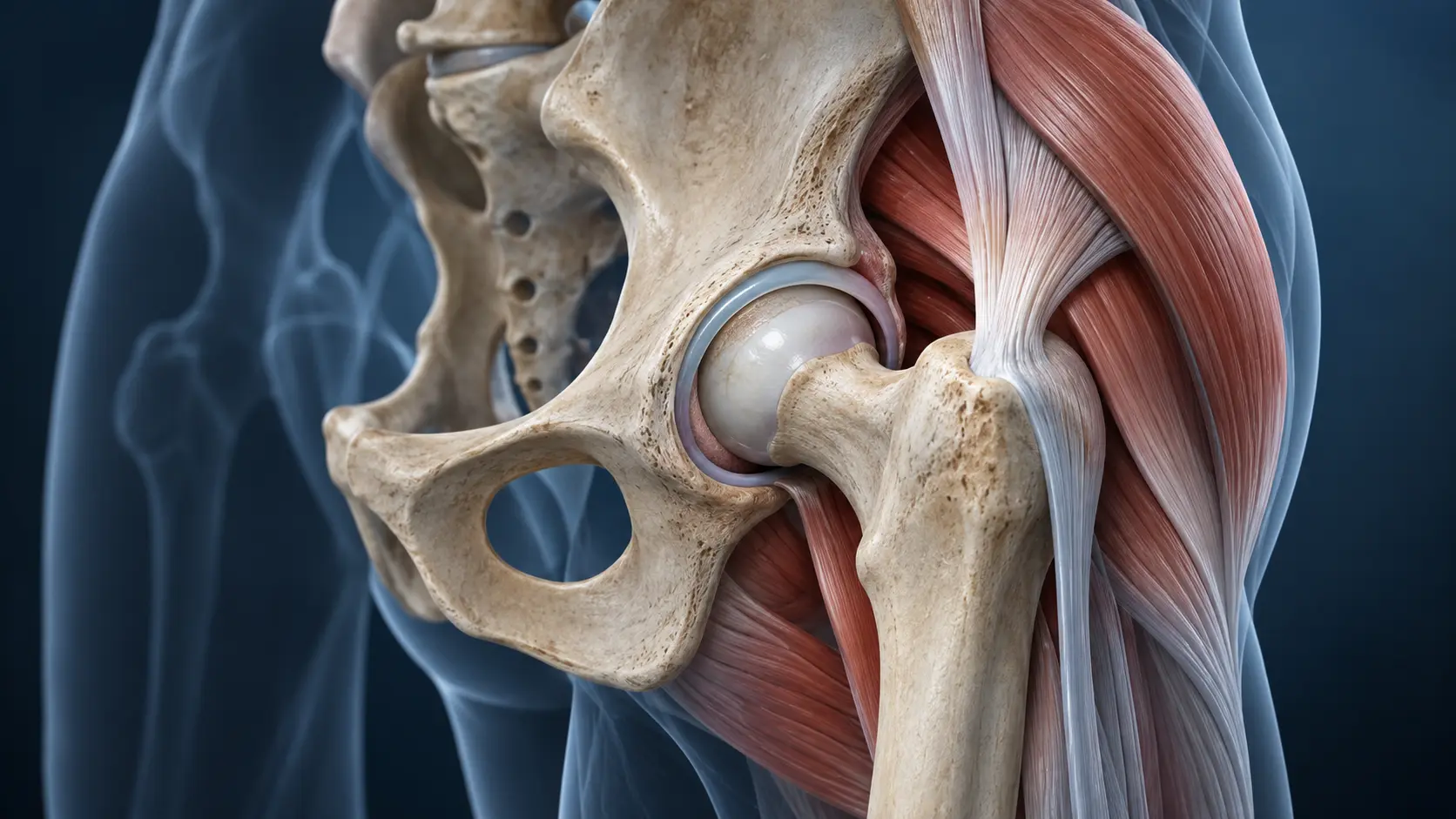
Common hip problems
- Hip osteoarthritis (in Polish) — pain, stiffness and gradually reduced function; treatment is selected for symptoms and function, not X-rays alone.
- Osteonecrosis of the femoral head (in Polish) — early diagnosis, disease stage and assessment of joint-preserving options matter.
- Femoroacetabular impingement (FAI) and labral injury (in Polish) — particularly relevant in some younger, active patients; imaging must be interpreted alongside symptoms.
- Adult hip dysplasia (in Polish) — abnormal joint anatomy that may contribute to pain, instability and earlier cartilage damage.
- Lateral hip pain and gluteal tendinopathy (in Polish) — symptoms often worsened by side-lying, pressure or prolonged walking.
- Snapping hip (in Polish) — snapping may be painless, but a painful or locking hip requires identification of the mechanism.
- Deep gluteal syndrome (in Polish) — one cause of buttock pain that needs differentiation from other hip and spinal conditions.
If you do not yet know the source of pain
A useful starting point is Hip Pain — Causes and Diagnosis (in Polish). Pain location — groin, lateral hip or buttock — helps organise possible causes, but diagnosis requires matching symptoms to clinical examination.
If the main symptom is groin pain (in Polish), a separate guide helps distinguish hip joint causes from muscle and tendon problems and non-musculoskeletal causes.
How does an orthopaedic surgeon select tests?
There is no single best test for all hip pain. Pelvic or hip X-rays are usually the initial investigation for chronic symptoms. Ultrasound is particularly useful for many tendon and superficial tissue problems; MRI or CT is selected to answer a specific clinical question or assist treatment planning.
Injuries and sports problems offer other pathways
An acute hip injury belongs to the Injuries section. Problems involving impingement, the labrum and reconstruction can also be found under Sports Medicine and Reconstructive Surgery. This organisation helps link symptoms and their mechanism with appropriate diagnostic or treatment information.
Medical author
Tomasz Poboży - orthopaedic surgeon, MD, PhD — specialist in orthopaedics and musculoskeletal traumatology.
This educational material does not replace an individual consultation or medical examination. Last updated: 13 September 2026.