 Skip to content
FOR DOCTORS AND PHYSIOTHERAPISTS
Outpatient and Ultrasound-Guided Procedures
Injections, aspirations, blocks and other outpatient procedures, with an emphasis on patient selection, technique and safety.
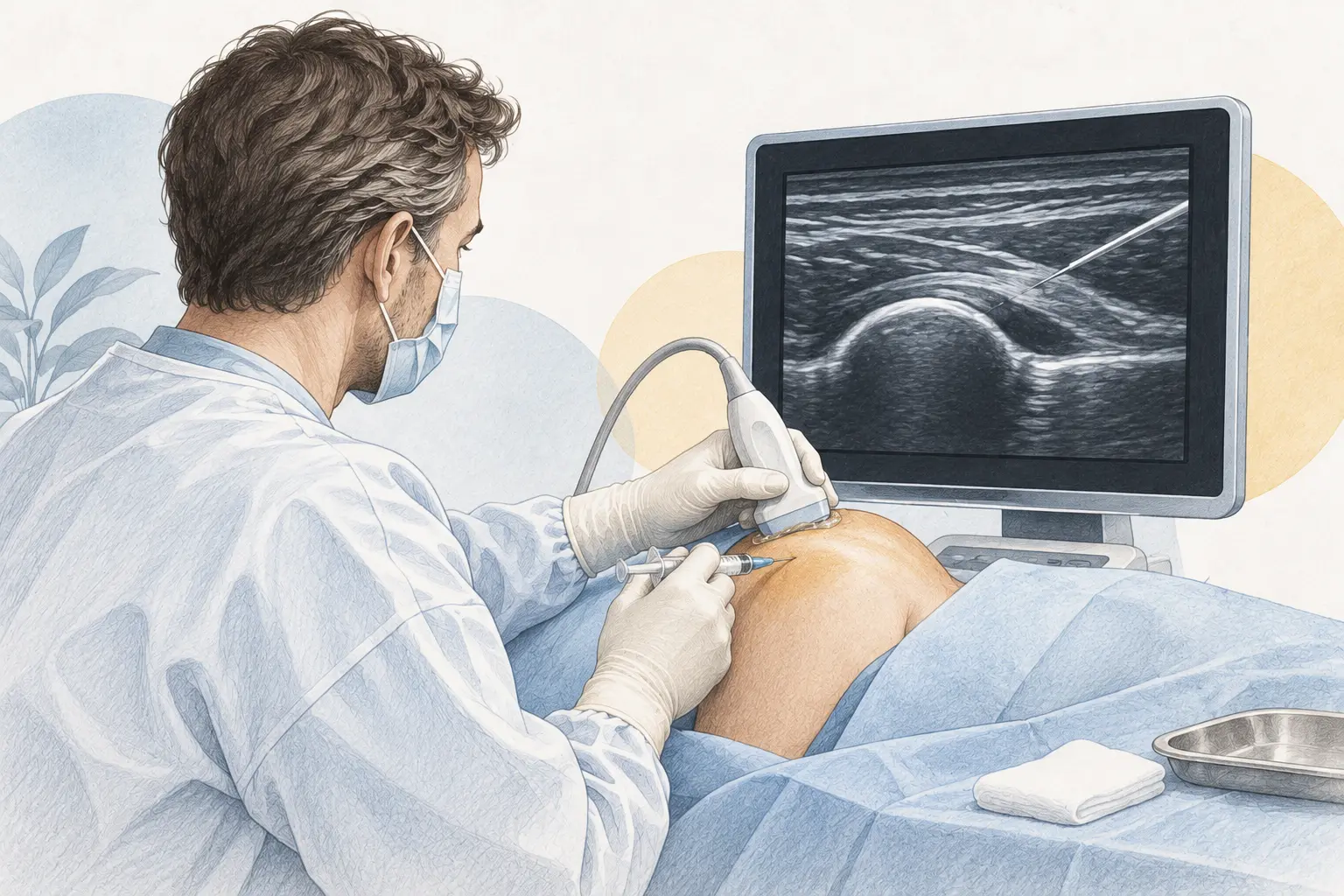
An outpatient procedure should not begin with choosing a preparation or technique. The starting point is the diagnosis, the aim of the procedure and whether the intervention has a realistic chance of changing pain, function or subsequent management.
How an orthopaedic surgeon plans safe patient selection and treatment
1. Indication and goal
Define the structure responsible for symptoms, the anticipated clinical effect and how to assess whether the procedure has achieved its goal.
2. Risks and contraindications
Assessment of infection, anticoagulant treatment, allergies, skin condition, comorbidities and previous reactions to similar procedures should precede treatment.
3. Target and trajectory
Before needle insertion, identify the target, choose a safe approach and recognise structures to avoid. During ultrasound-guided procedures, the needle should be tracked in real time.
4. Choice of procedure and preparation
The intervention should match the diagnosis. Intra-articular or periarticular injection, aspiration, barbotage and hydrodissection have different aims and are not interchangeable.
5. Asepsis and documentation
Maintain appropriate asepsis and document the indication, technique, preparation used, relevant procedural parameters and immediate tolerance.
6. Post-procedure plan
The patient should know what to expect immediately afterwards, temporary restrictions, when to assess the result and which symptoms require urgent contact.
Scope of this section
- intra-articular and periarticular injections,
- punctures and aspirations,
- PRP growth factors explained — Part 1: an English video and reading guide for healthcare professionals,
- PRP: What Is in the Plasma? — Part 2: plasma proteins and the wider biological environment,
- other biological therapies — always in the context of indications and evidence quality,
- barbotage of calcific deposits,
- hydrodissection and hydrodecompression of selected nerves,
- selected blocks and diagnostic or therapeutic procedures under ultrasound guidance.
These resources are intended for doctors and physiotherapists.
Medical author
Tomasz Poboży - orthopaedic surgeon, MD, PhD — specialist in orthopaedics and musculoskeletal traumatology.
This educational material does not replace an individual consultation or medical examination. Last updated: 13 September 2026.