 Skip to content
FOR DOCTORS AND PHYSIOTHERAPISTS
Shoulder and upper arm
Rehabilitation after tendon repair, shoulder stabilisation, arthroplasty and fracture fixation.
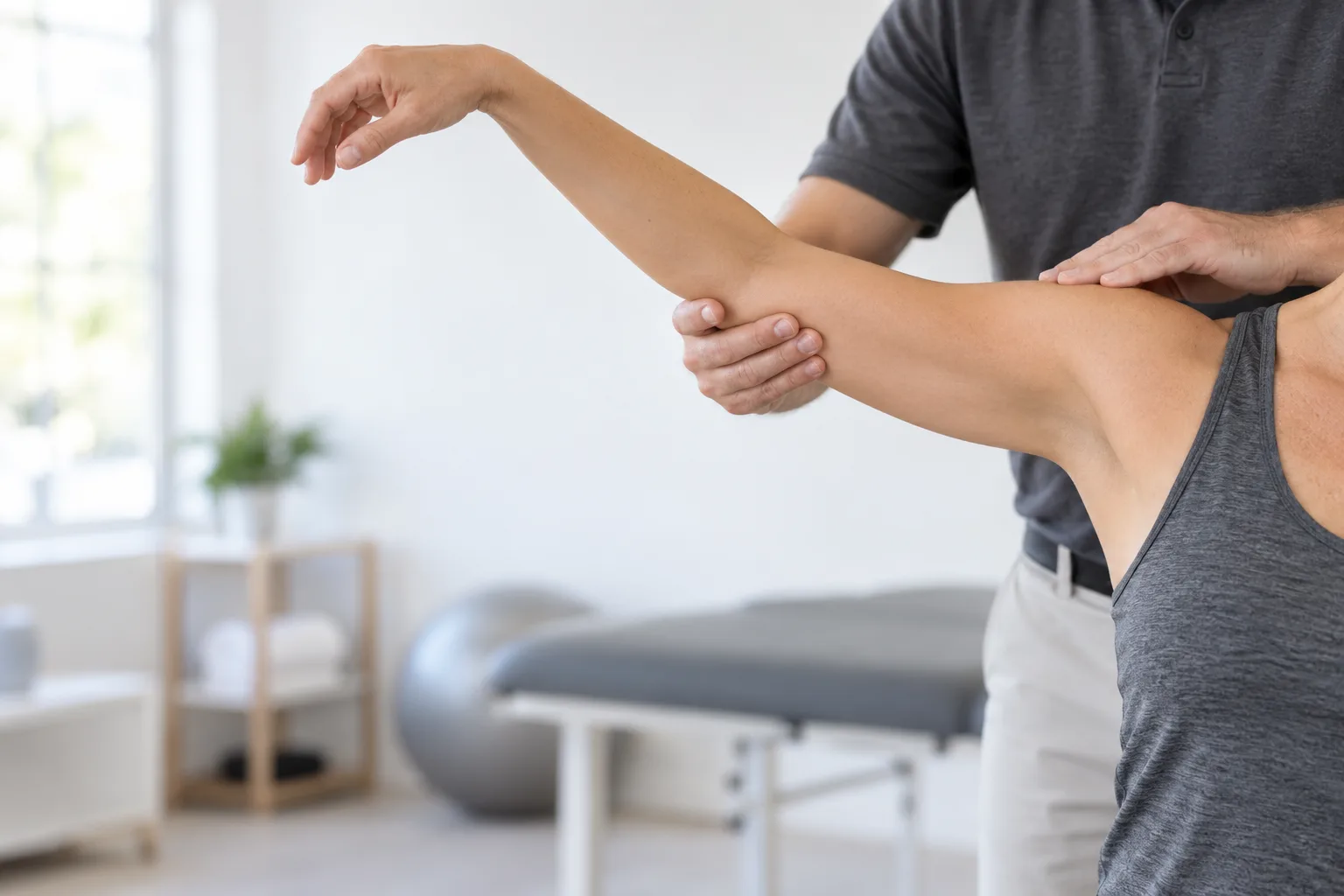
Protocols and individual care
The individual case, the individual patient, the individual surgeon. The name of an operation alone does not describe the extent of injury, tissue quality or the repair achieved. Understanding these details and working with the orthopaedic surgeon helps establish a safe pace of rehabilitation.
If the physiotherapist cannot agree individual adjustments with the surgeon, the operative report and the postoperative instructions remain the reference. An unclear extent of repair calls for further information, rather than independently accelerating rehabilitation.
Available protocols
This section brings together material on common shoulder and upper-arm procedures. Detailed recommendations must take account of the actual repair, tissue and bone quality, stability and concomitant procedures.
- Rotator cuff repair — small and medium tears
- Bankart stabilisation — labral repair with anchors
- Reverse shoulder arthroplasty — rehabilitation protocol
- Anatomic shoulder arthroplasty — rehabilitation protocol
- Arthroscopic subacromial decompression — rehabilitation protocol
- Subscapularis tendon repair — rehabilitation protocol
- Biceps tenodesis — rehabilitation protocol
- Latarjet procedure — rehabilitation protocol
- ACJ dislocation — hook plate fixation
- Midshaft clavicle fracture — LCP plate fixation
- Proximal humerus fracture fixation — locking plate or anatomic nail
- Arthroscopic capsular release for shoulder stiffness — rehabilitation protocol
Educational material for professionals. It does not replace individual clinical assessment or the operating surgeon’s instructions.
Content prepared by: Tomasz Poboży - orthopaedic surgeon.